What a Lighting Design Consultation Actually Involves
New Age Lights • September 2026 • TN • AL • OH • 7 min read
Short Answer: A proper consultation is mostly looking and asking rather than selling. We walk the property, study the architecture and where the sightlines fall, check power availability and mounting surfaces, and ask how you actually intend to use the lighting. From that comes a design and a proposal with a defined scope. It typically takes forty five minutes to an hour, it should cost you nothing, and you should leave understanding what is proposed and why each run is where it is. If someone quotes your house from a satellite image without visiting, that is not a design.
Homeowners are often unsure what they are agreeing to when they book a consultation, and whether it commits them to anything. It does not, and knowing what happens makes the hour considerably more productive.
Here is what the visit involves and how to get the most from it.
We Start by Looking at the House
The first thing that happens is that we look at your home the way it is actually seen, which usually means walking to the street and standing where a visitor or a passing car sees it.
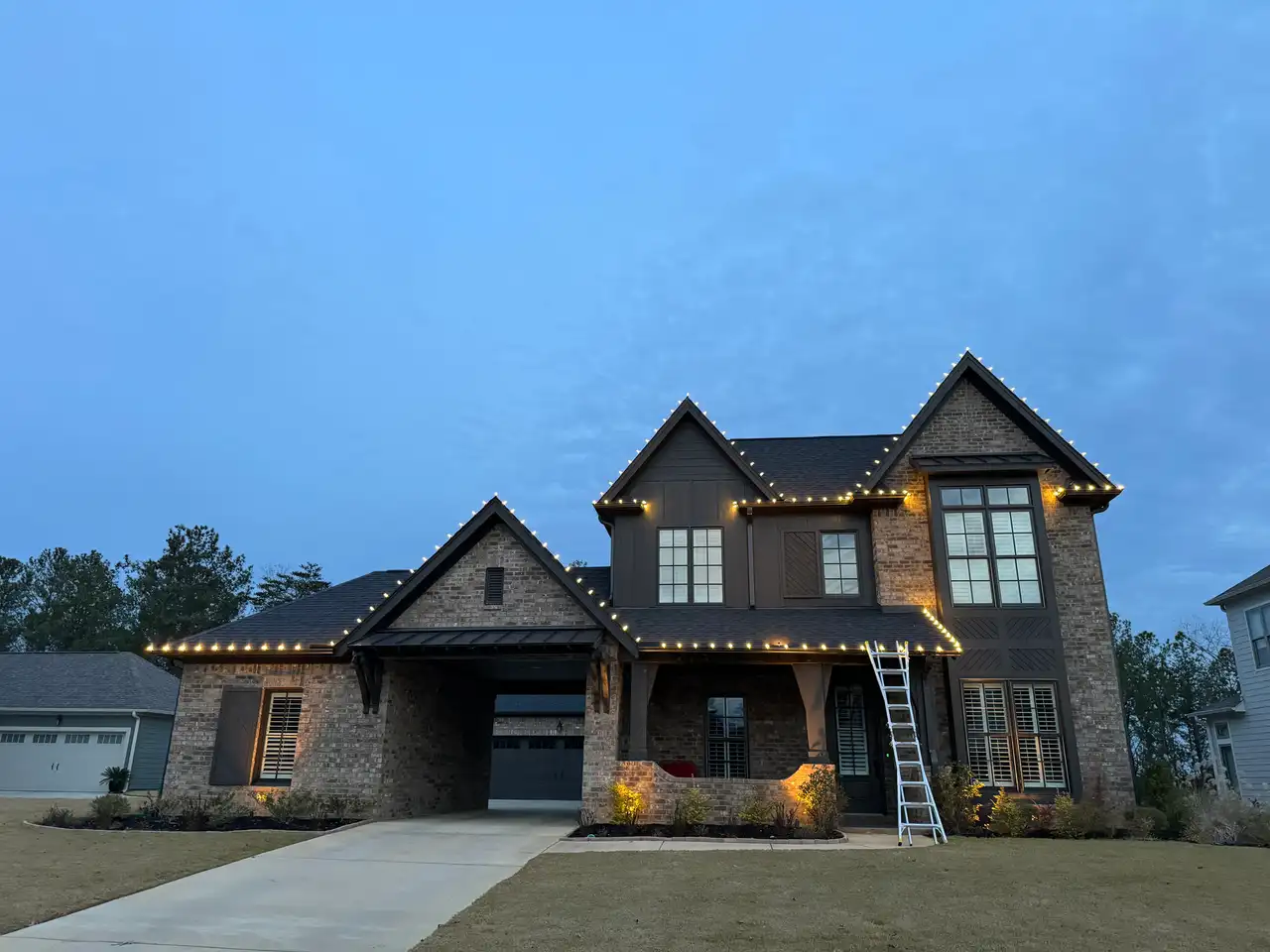
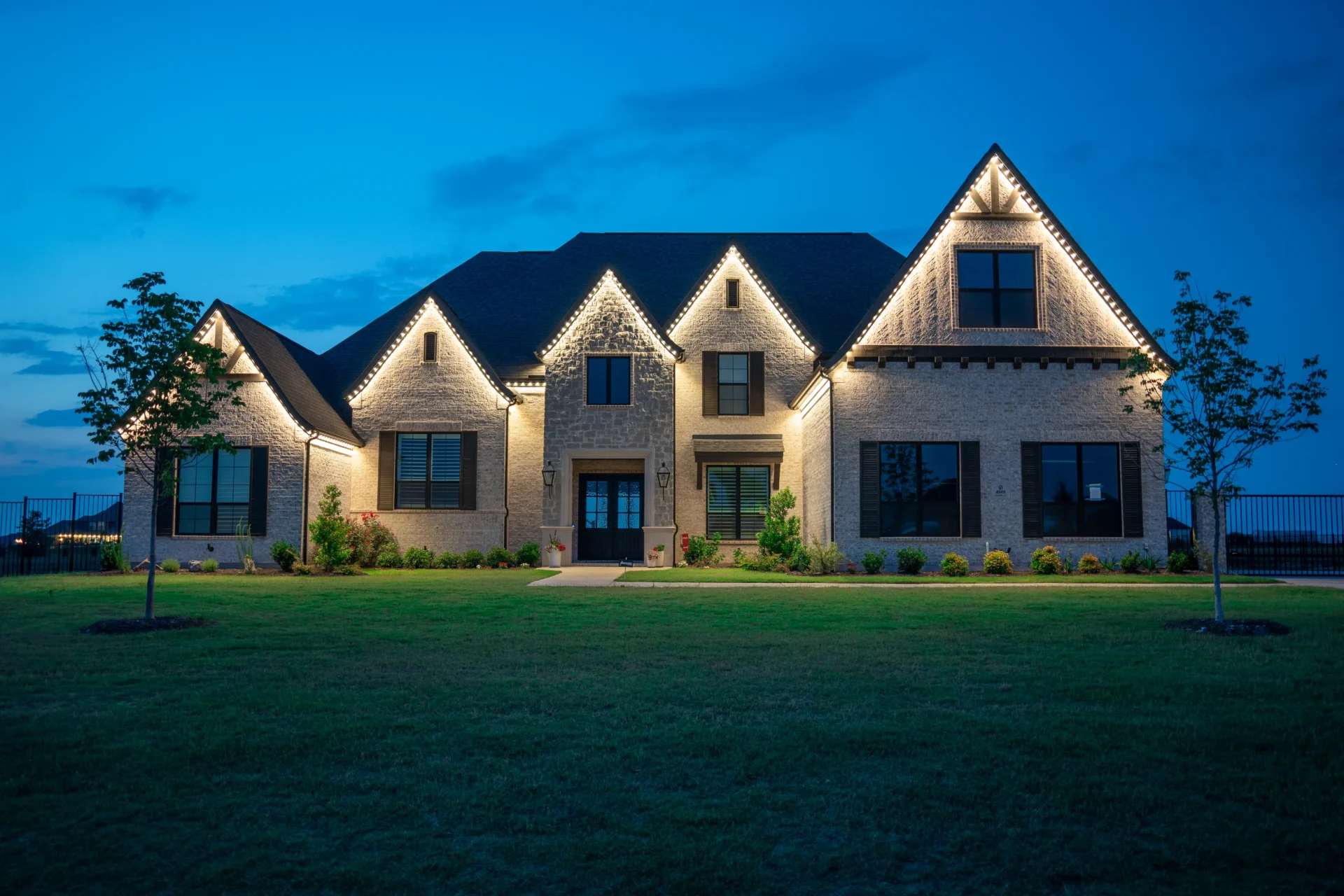
What we are studying is the architecture. Where the strong horizontal lines are, where the roof creates peaks and gables worth emphasizing, whether there are dormers, columns, or an entry that deserves attention, and where the eye naturally travels.
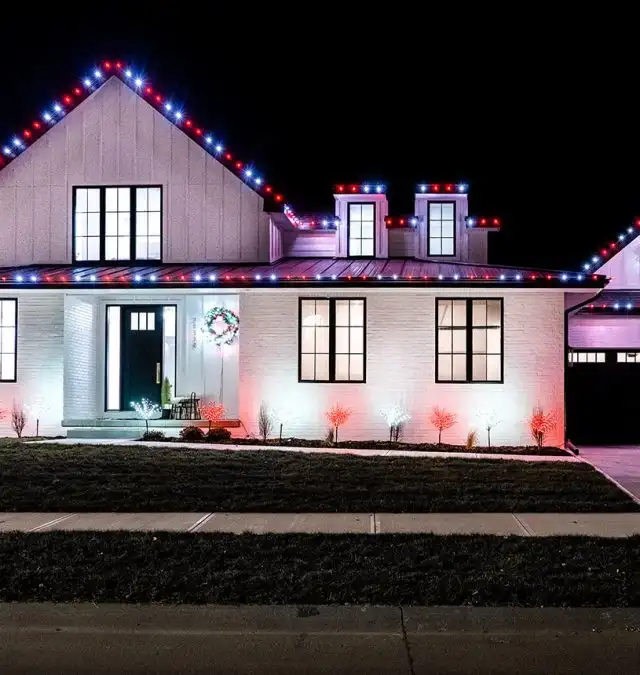
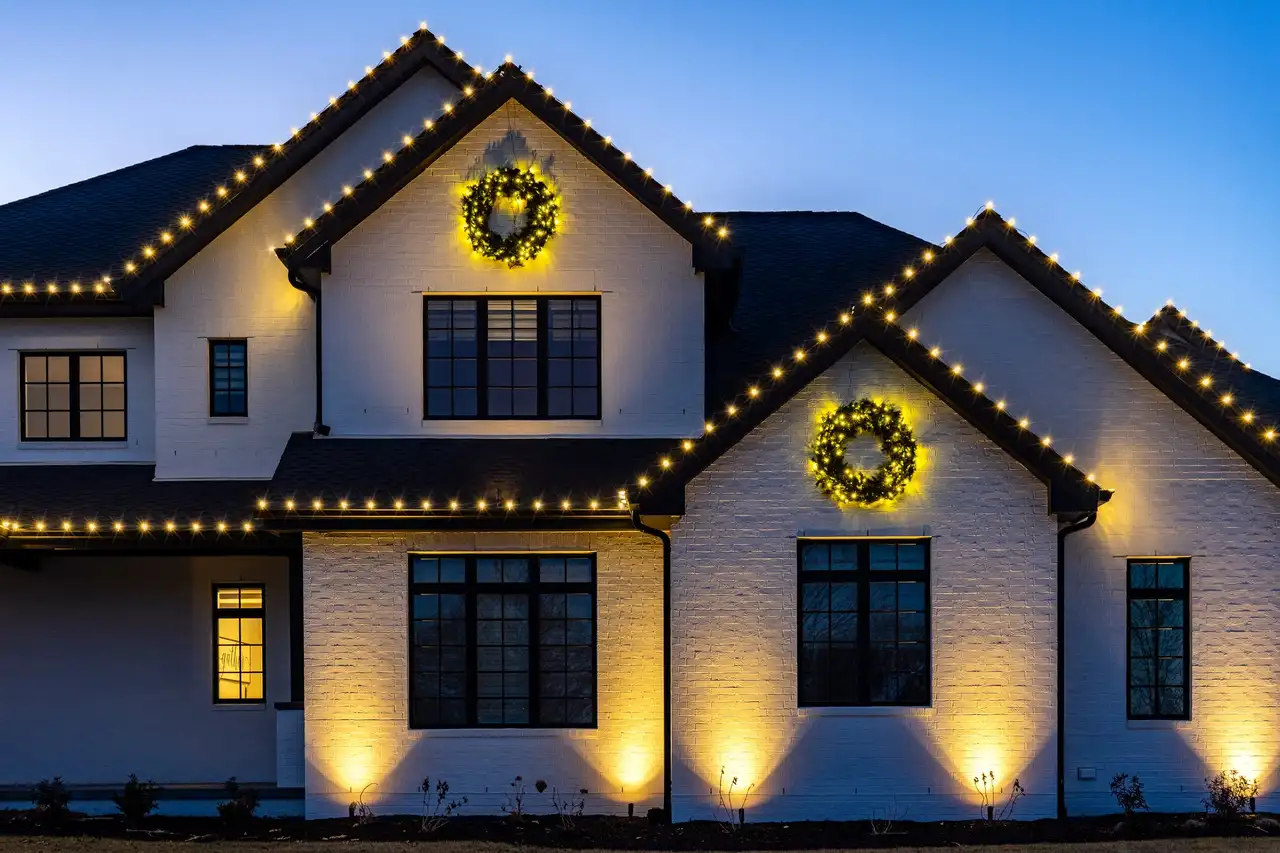
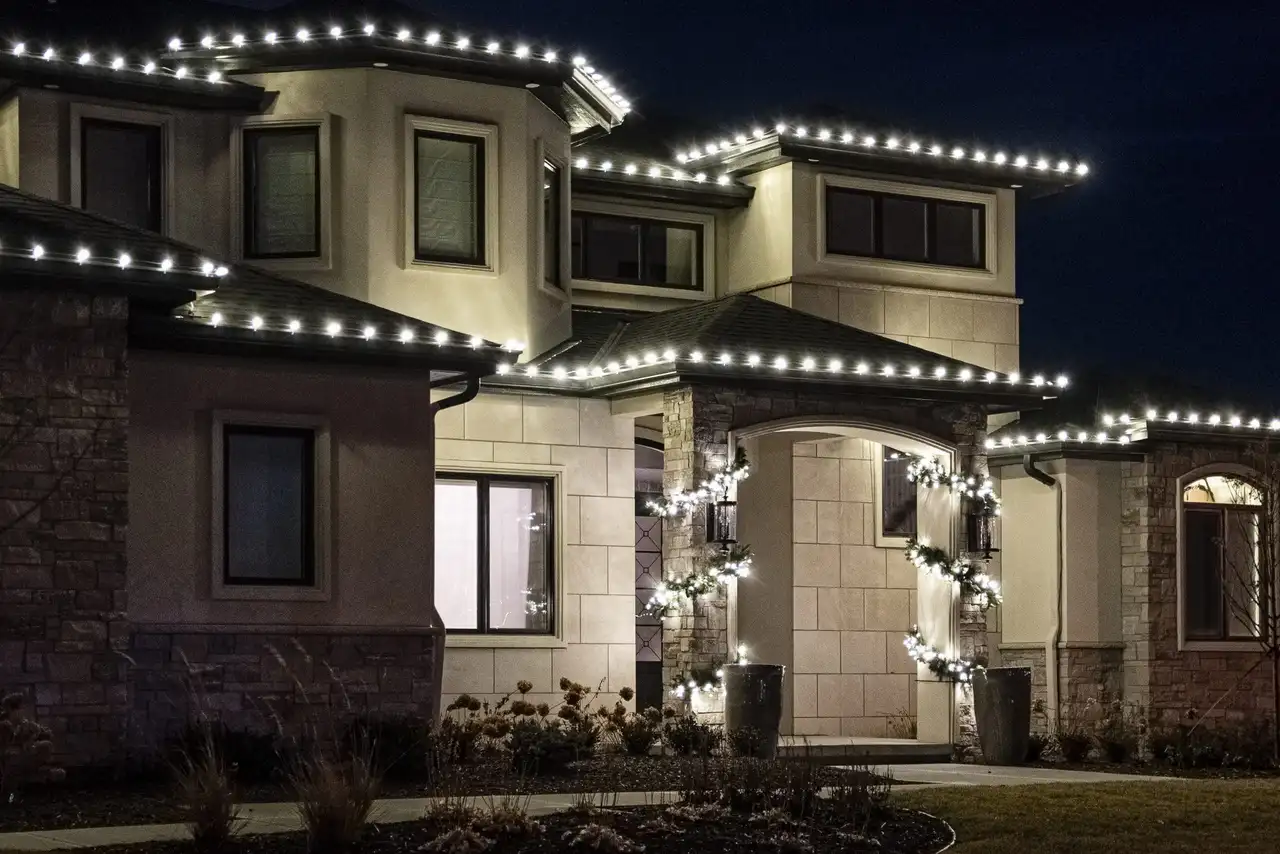
Good permanent lighting follows the architecture rather than simply outlining everything. A house with strong gables wants those gables emphasized. A long low ranch wants its horizontal line strengthened. Outlining every available edge is the most common way these installations end up looking cluttered rather than considered.
We also look at what is in the way. Mature trees, gutters, existing fixtures, and how much of the roofline is genuinely visible from the primary viewing angle. There is little point lighting a run nobody ever sees.
The Practical Assessment
Alongside the aesthetics there is a technical survey, and it determines what is actually possible.
Mounting surfaces come first. Fascia, soffit, and trim vary in material and condition, and the approach differs on wood, aluminum, vinyl, and masonry. If fascia is deteriorating, that is worth knowing before anything is mounted to it, and we would rather tell you than mount track to wood that needs replacing.
Power availability matters next. Systems need a supply, and where the controller lives affects run lengths and the neatness of the installation. Sometimes an outlet needs adding, which means an electrician and additional scheduling.
Roof height and access affect the installation method and therefore the cost. A single story with clear access is straightforward; a steep three story with landscaping tight against the wall is not.
We measure the runs properly rather than estimating, because linear footage is the basis of the price and guessing it produces a quote that changes later.
The Questions We Ask You
This part shapes the design more than anything we observe.
How do you want to use it? Only at Christmas, or throughout the year? That single answer changes the recommendation substantially, and it is the one worth thinking about before we arrive.
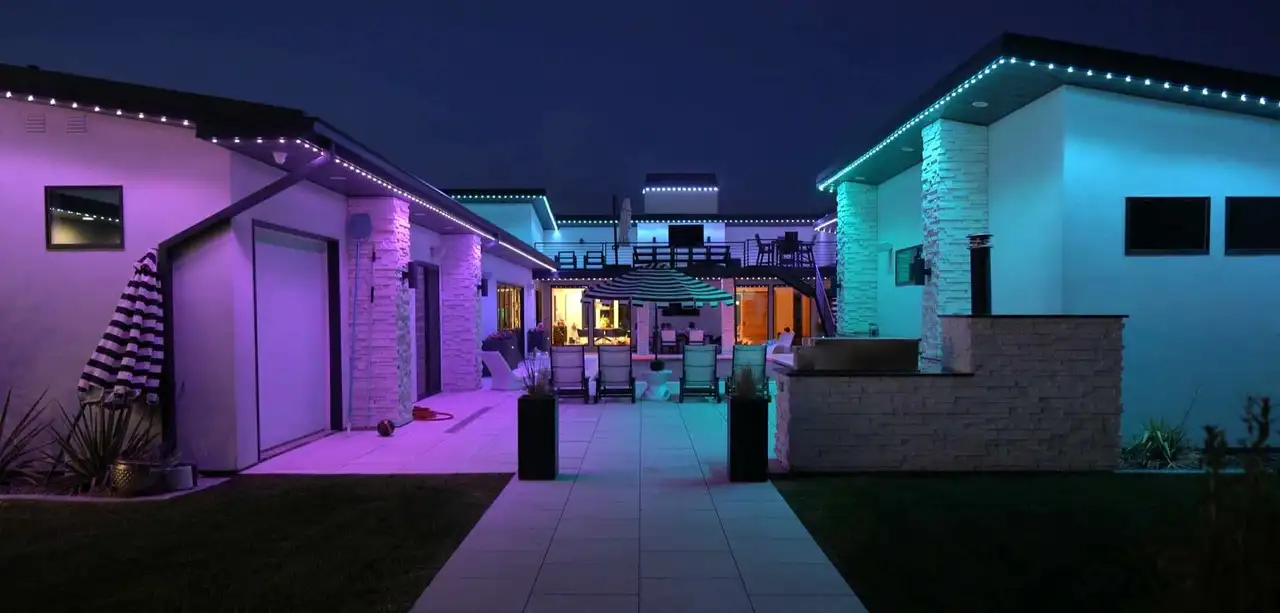
Which holidays and events matter to your household? Do you want team colors, and for which teams? Do you entertain outdoors, and is there a patio or pool area worth including alongside the roofline?
What do you want it to feel like on an ordinary Tuesday evening in March, when there is no holiday at all? Most homeowners have not considered this and it is frequently the setting they end up using most.
And is there anything you actively dislike? People often have a clear reaction to something they have seen on another house, and knowing that is genuinely useful.
What You Should Have Ready
A little preparation makes the visit far more productive.
Take a photograph of your house at dusk from the street, from the angle it is most often seen. That image is the single most useful thing you can provide.
Have a rough budget range in mind. Not a precise figure, just a bracket. It is not a negotiating position, it determines whether we design something you can actually build or something you look at once and decline.
Know whether you have an HOA and whether it has any exterior standards. That is worth establishing before design rather than after.
And if more than one person will be making the decision, have both present. Lighting is visual and preferences differ, and a design agreed by one person and reviewed by another afterward usually means a revision round.
What You Receive
After the visit you should get a proposal with a defined scope: which runs are included and their approximate footage, the system specified, controller placement, what the installation includes, and the warranty terms for both components and workmanship.
You should also get an explanation of why the design is what it is. If a run was left out, there should be a reason, whether that is visibility, mounting surface, or budget priority.
Take the time you need with it. A well designed permanent lighting installation is something you will look at every evening for many years, and a few days of consideration is entirely reasonable. Anyone applying pressure to sign at the visit is telling you something about how they operate.
The Design Mistakes Worth Avoiding
A consultation is partly about steering away from choices people regret, and the same few come up repeatedly.
Outlining everything is the most common. The instinct is that more coverage means more impact, and the result is usually the opposite: a house edged uniformly in light reads as busy rather than elegant, and the architecture disappears into a single continuous outline. Restraint is what makes these installations look designed.
Lighting runs nobody sees is the second. Homeowners frequently want the full perimeter included, and then discover that a substantial stretch faces a fence line or dense trees. That footage costs the same as the visible footage and returns nothing.
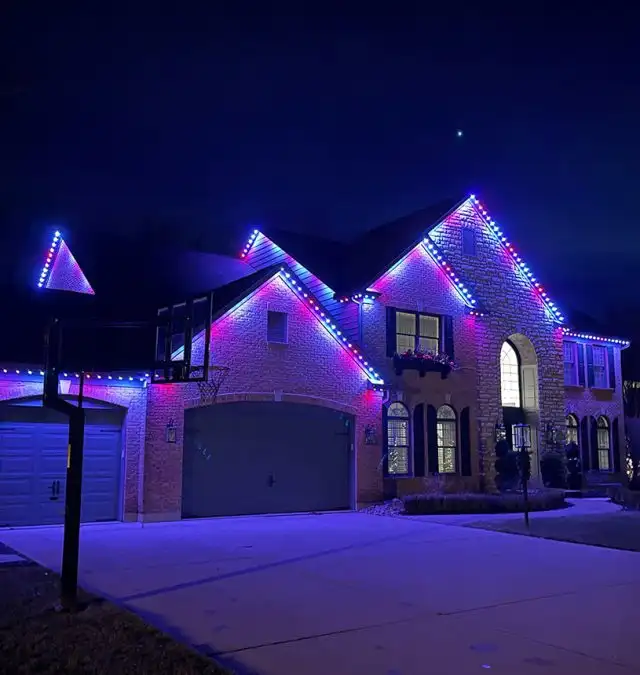
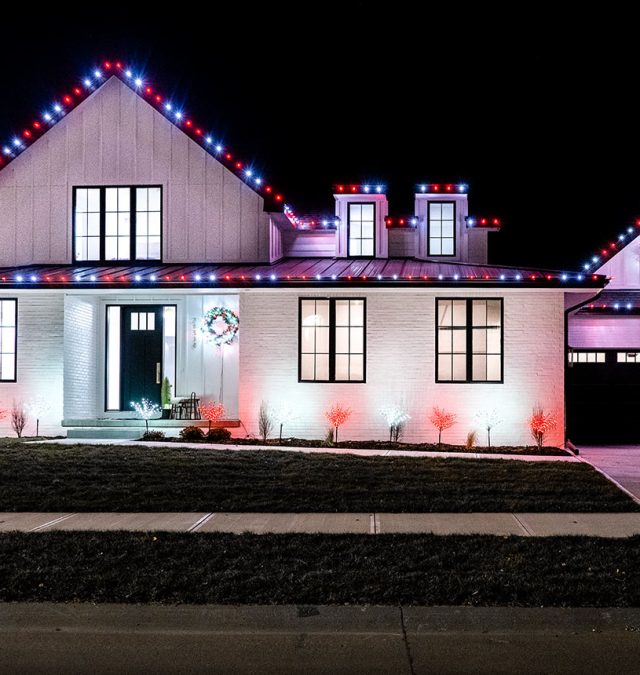
Choosing colors on a screen is the third. Colors look markedly different projected onto brick, painted siding, or stone than they do in an app preview, and warm tones in particular shift depending on the surface. Seeing a demonstration on your own house resolves this instantly.
And forgetting the everyday setting is the fourth. People design entirely around Christmas, then find they run warm white three hundred nights a year. If the warm white looks mediocre on the system chosen, that is what you live with.
What It Does Not Involve
Worth stating plainly.
It does not cost you anything, and it does not obligate you to proceed. It is entirely reasonable to get more than one consultation for a project of this size, and no established company will object to that.
It also should not involve a price that expires that evening. Permanent lighting is not an impulse purchase and it should not be sold like one.
And it does not require you to have made any decisions in advance. Plenty of the consultations we do are with people who are genuinely undecided between a seasonal install and a permanent system, or who are not sure whether they want lighting at all this year. Seeing what each would look like on your own house is usually what settles it, and that is a perfectly good reason to book.
If the visit ends with you deciding to wait a year, that is a legitimate outcome. We would rather you install something you are certain about next autumn than something you were talked into this one.
What to Do Next
Go outside at dusk this week, walk to the street, and look at your house properly. Note which features disappear at night and which lines you would like to see picked out.
Decide roughly whether you want this for the holidays specifically or for the whole year, because that answer directs everything else.
Then book while there is still design time in the calendar. New Age Lights installs permanent and seasonal lighting across Knoxville and Oak Ridge, Chattanooga and McDonald, Birmingham, Huntsville, and the Cincinnati area including Deer Park. Call 256-530-0754 or visit newagelights.com.
Here is what to expect from us. We will come to the house rather than quoting from an aerial image, walk it with you, and design to your architecture instead of applying a standard layout. If we think a smaller scope would look better on your particular home than a larger one, we will tell you that, because a design that suits the house is what gets admired rather than one that simply uses more track.