Permanent Lighting
Snow, Ice, and Freeze Cycles: How Permanent Lighting Handles an Ohio Winter
New Age Lights of Cincinnati • October 2026 • Cincinnati & Deer Park, OH • 7 min read
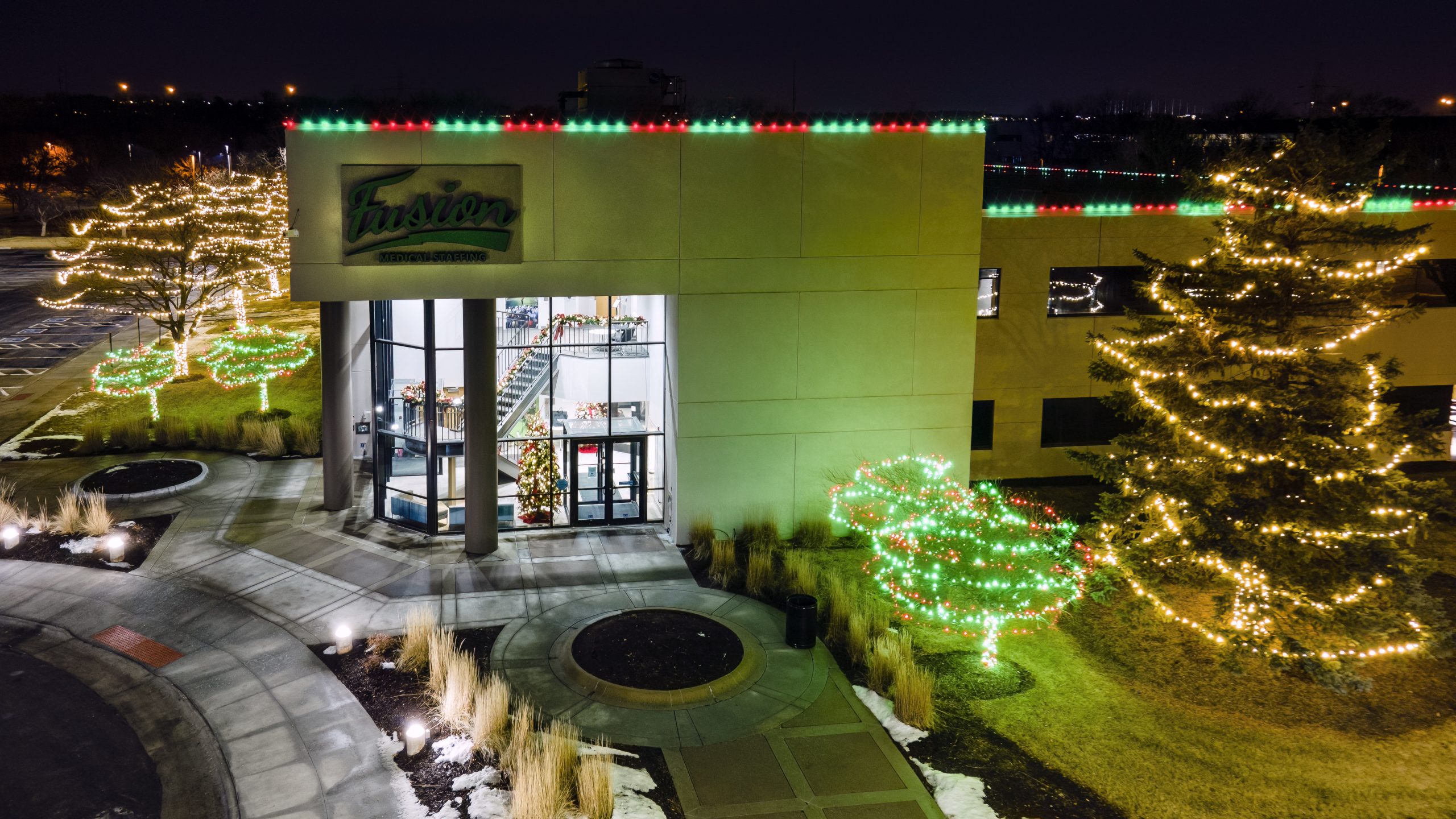
Short Answer: LEDs actually perform slightly better in cold, so low temperature itself is not the concern. What stresses a system through an Ohio winter is freeze and thaw cycling, which works repeatedly at any gap in a fascia penetration and makes already UV degraded plastic brittle enough to crack. Ice dams put meltwater where it should not be, and road salt reaches fixtures on properties near treated streets. Extruded aluminum channel, sealed connectors, and corrosion resistant fasteners are what those conditions argue for.
The first question in a northern market is always whether these systems survive winter, and the answer is yes, with the caveat that not all of them survive it equally.
The useful version of the answer identifies what actually causes failures here, because it is not the thing people expect. Cold is fine. What gets systems is water changing state repeatedly.
Cold Itself Is Not the Problem
Worth clearing this first because it is the intuition everyone arrives with.
LED efficiency improves slightly as temperature drops. The diodes operate comfortably well below anything a Cincinnati winter produces, and heat is considerably harder on LED longevity than cold is.
That means our summers stress the diodes more than our Januaries do, which is the opposite of what most people assume.
Electronics in the controller and transformer are rated for a temperature range, and mounting them in a garage rather than exposed removes any question. That placement is standard and worth confirming.
So the honest answer on cold is that it is a non issue for the light producing part of the system.
Freeze and Thaw Is the Real Mechanism
This is what actually degrades installations in this climate, and it is worth understanding because it points directly at what to specify.
Cincinnati does not freeze in November and thaw in March. It oscillates, crossing the freezing point repeatedly through the winter, sometimes several times in a week.
Every one of those cycles expands and contracts whatever moisture has found its way into a gap. A tiny opening at a fascia penetration that would be harmless in a stable climate gets worked larger over dozens of cycles per winter, year after year.
That is why penetration sealing is the single most important installation detail in this market. The consequence of getting it wrong is not a dim section, it is water in the soffit or roof framing, discovered years later.
The same cycling makes material choice consequential. Plastic that has already been UV degraded through summer becomes brittle at low temperature, and brittle plastic cracks during thermal contraction. Extruded aluminum does not have that failure mode.
Ice Dams
A roofing problem that intersects with a lighting installation, and worth understanding if your house is prone to them.
Ice dams form when heat escaping through a roof melts snow higher up, that meltwater runs down to the colder eave, and refreezes there. The resulting ridge of ice backs water up under shingles.
Older Cincinnati housing stock with less attic insulation is more prone to this, and it is a familiar problem across the region.
A lighting channel at the roof edge sits in exactly that zone. It does not cause ice dams, and where one forms, the channel and its fastenings are in the path of standing meltwater for an extended period. That is another argument for sealed connectors and properly sealed penetrations.
If your home has a history of ice dams, that is worth mentioning during the design conversation. Placement can sometimes be adjusted, and it is better raised beforehand than discovered.
The underlying fix is attic insulation and ventilation rather than anything a lighting installer can address, and a house with a persistent ice dam problem has a roofing conversation to have independently.
Snow Load and Accumulation
Less of a concern than people assume, for a structural reason.
A channel is a low profile continuous member fastened along its length, so it presents very little surface for snow to load. Accumulation on and around it is not a structural issue, and it melts off.
Sliding snow is the more realistic mechanical event. On a steep roof, which is common on older homes here, an accumulated slab releasing at once can strike a roof edge with force. A properly fastened aluminum channel handles that better than a plastic one, and it is another reason fastener quality matters.
The visual side is a genuine positive. Snow is reflective, so a lit roofline over snow produces more ambient glow than the same system over bare ground, and accumulated snow on the channel diffuses the fixtures into a softer line. It is one of the better conditions these systems produce.
Salt
A northern factor that gets almost no attention and matters on some properties.
Road salt becomes airborne spray from passing traffic, and properties close to a treated road receive it on the lower portion of the structure through the winter. Salt accelerates corrosion on metal hardware.
For a roofline installation the exposure is limited, since the system is well above spray height on most homes. Where it matters is lower mounted runs, fixtures near a garage on a close set property, and any hardware at ground level.
Corrosion resistant fasteners address it. This is another place where plated hardware fails first, and the staining it produces on fascia is visible from the street.
If your property fronts directly on a salted road with little setback, it is worth raising.
What to Specify in This Climate
Pulling the above into a short list of questions worth asking any installer here.
Extruded aluminum channel rather than plastic, for UV resistance in summer and because it does not become brittle in cold.
The ingress protection rating on the fixtures, stated as a number rather than described as weatherproof.
Sealed connectors at every junction rather than simple push fittings, since junctions are where moisture enters.
Corrosion resistant fasteners, and a specific answer on how fascia penetrations are sealed.
And whether individual sections can be replaced, which determines what a limb strike or a single failure costs years from now.
Power and Outages
A northern consideration that does not come up in milder markets.
Ice storms and heavy wet snow bring down limbs and lines, and extended outages happen here. A lighting system simply goes dark during one, which is not a problem in itself.
What matters is what happens on restoration. Power coming back can arrive with surges, and a controller and transformer are the vulnerable components. Surge protection on that equipment is inexpensive relative to replacing it, and in a region with our storm and ice frequency it is worth asking whether it is included.
Most systems retain their programming through an outage and resume on schedule. Confirming that with your installer, and knowing how to restore settings if a controller does lose them, is a reasonable thing to cover during the handover.
Winter Maintenance
Short list, because these systems ask little.
Nothing needs to be done to a permanent system before winter. There is no shutdown, no draining, no protective step. It runs.
What is worth doing is clearing gutters in fall, since a channel adjacent to a gutter packed with debris sits against held moisture all winter.
Do not attempt to clear snow or ice off a channel with a tool. Chipping at ice near fixtures is a good way to damage them, and the accumulation is not causing harm.
Watch for a section that has gone dim or dark relative to its neighbors, which usually indicates a connection rather than a diode, and catching it early keeps it a service call.
What to Do Next
If you are shopping, ask the five specification questions above and weight the answers over price difference, because this climate punishes cheap components on a schedule of about five years.
If your home has a history of ice dams, raise it during the design conversation so placement can account for it.
If you already have a system, walk out and look at the fascia beneath the fasteners for rust staining, which indicates plated hardware corroding and is worth addressing before it progresses.
Clear your gutters this fall, which helps the lighting installation as a side effect of helping the roof.
To discuss a system specified for Ohio winters, contact New Age Lights of Cincinnati at 513-713-0490 or visit https://newagelights.com/new-age-lights-of-cincinnati/. We serve Cincinnati, Deer Park, Blue Ash, Mason and the surrounding communities.