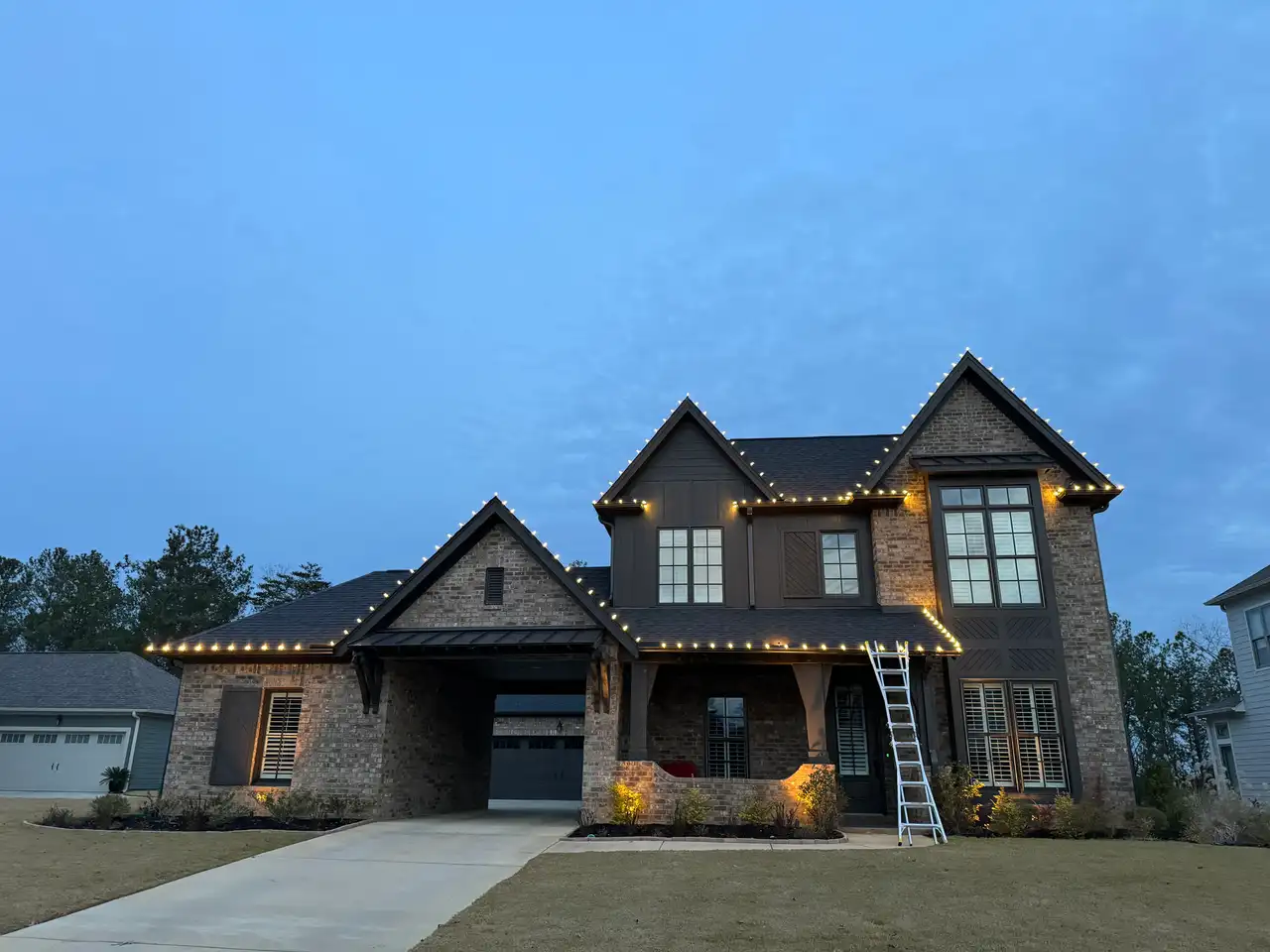
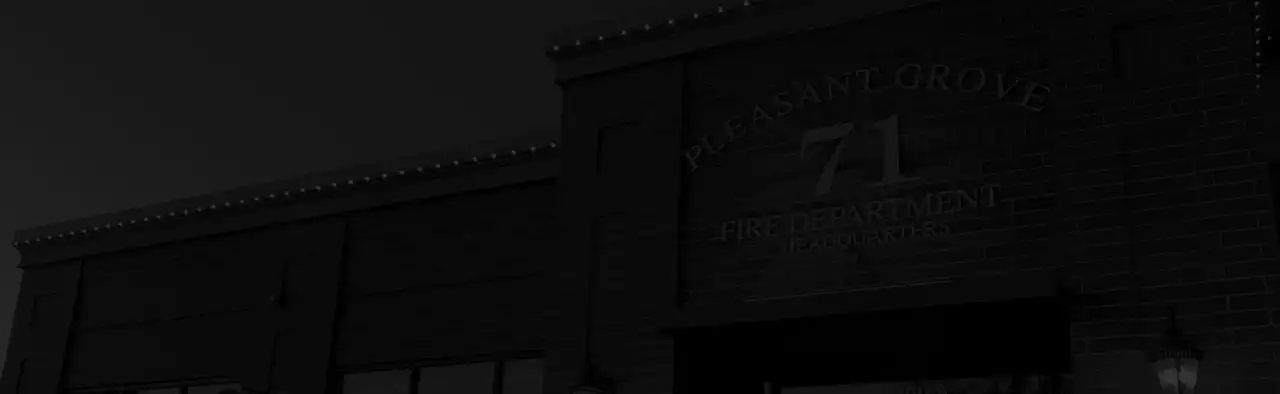
Commercial Permanent Lighting: What Businesses Should Know
New Age Lights • September 2026 • TN • AL • OH • 7 min read
Short Answer: For a commercial property, permanent architectural lighting solves a recurring operational problem rather than adding a decoration. Instead of contracting seasonal installation and removal every year, negotiating dates, and dealing with ladders and liability on your building, the system is installed once and controlled from an app. It runs warm white year round for ordinary evenings, switches to brand colors for events, and handles every holiday without anyone returning to the roof. The decision differs from a residential one mainly in approvals, scheduling around business hours, and the fact that the building is usually visible to customers every single evening.
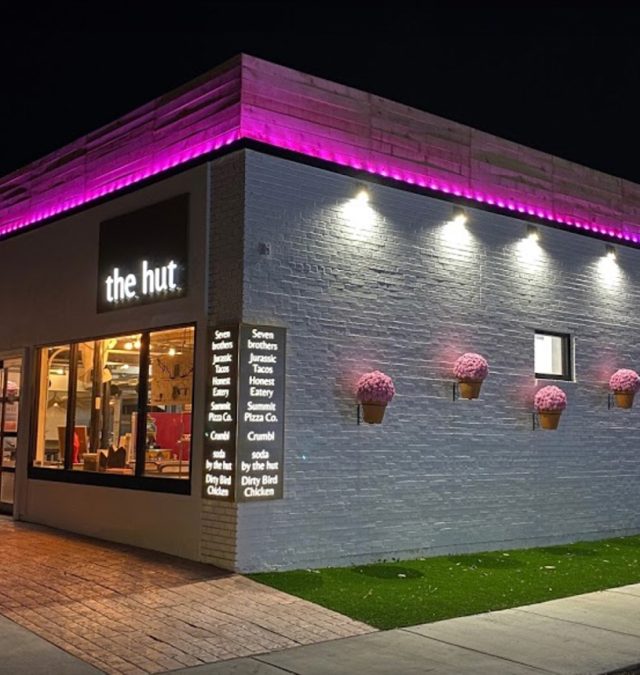
Most conversations about permanent lighting focus on homes. The commercial case is different, and in several ways it is more straightforward, because the value is easier to measure.
If you own or manage a building in Knoxville, Chattanooga, Birmingham, Huntsville, or the Cincinnati area and have been arranging seasonal lighting each year, this is the alternative worth understanding before you book another season.
The Recurring Problem It Removes
Seasonal commercial lighting is a project that repeats annually, and each repetition carries the same friction.
Someone has to source a contractor, agree a scope, negotiate dates that do not disrupt trading, arrange access, and then repeat the exercise for removal in January. Every year the price is renegotiated, and every year availability is tighter in the weeks everybody wants.
There is also the matter of people on ladders and lifts around a building the public uses. That is a real consideration for any property manager, and it recurs twice annually.
A permanent system converts that into a single installation. The hardware stays mounted and largely invisible in daylight, and the seasonal change becomes a setting rather than a site visit.
It Is Not Only a Holiday System
This is the part that changes the calculation for commercial properties specifically.
A holiday only install is dark for ten or eleven months. A permanent system is available every evening of the year, which means the building is lit consistently rather than occasionally.
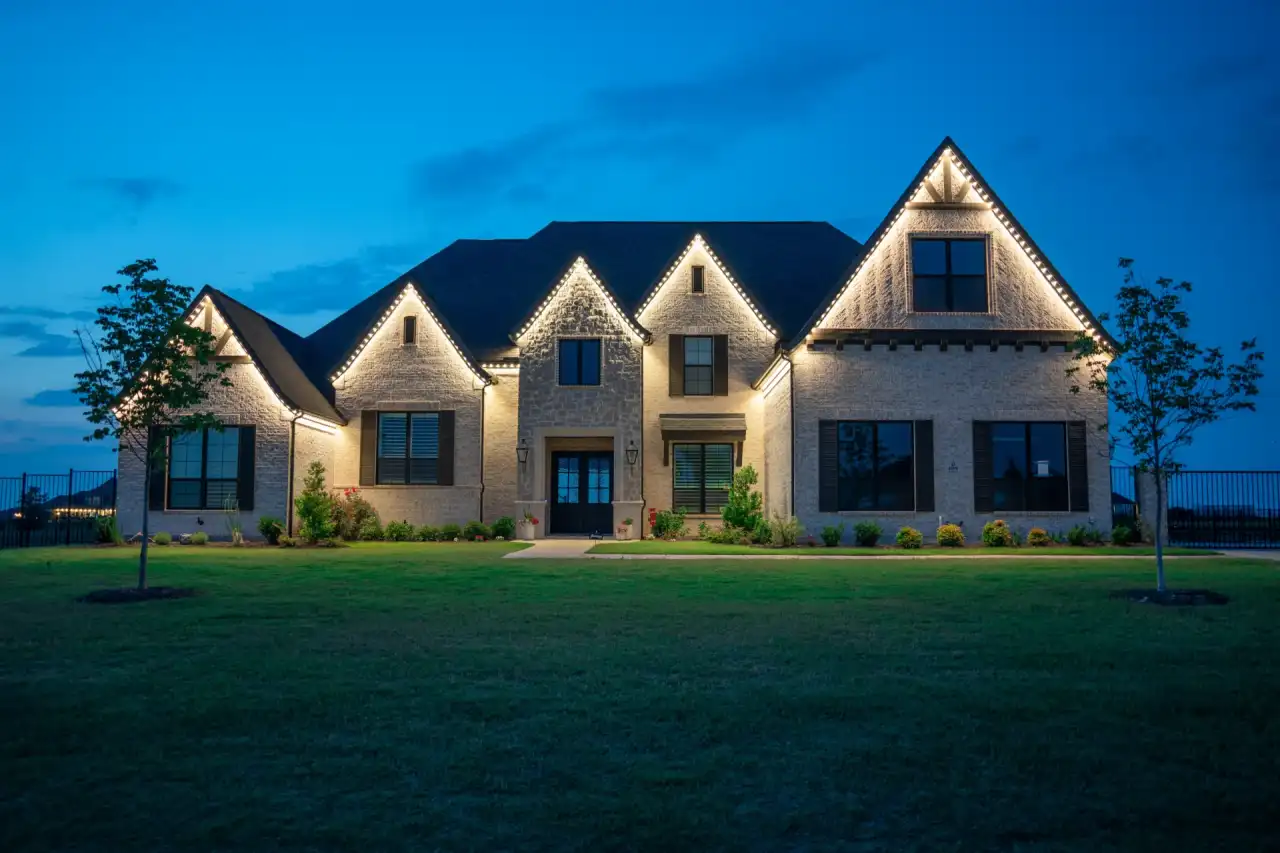
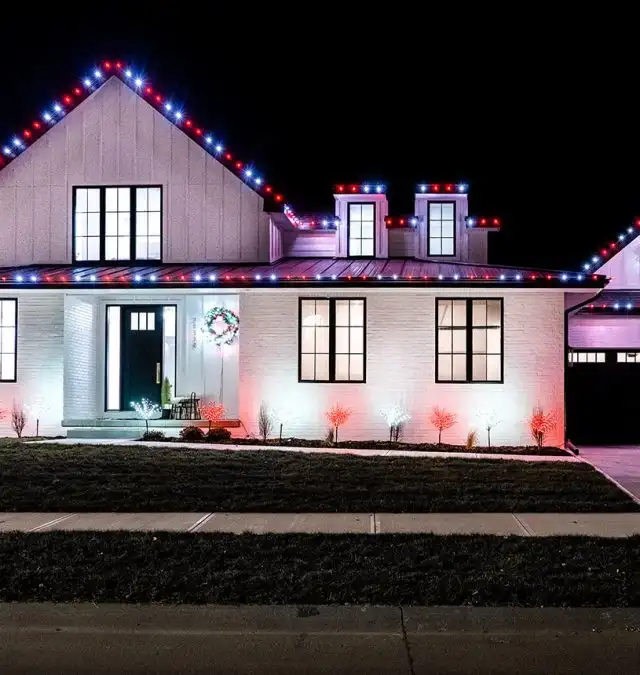
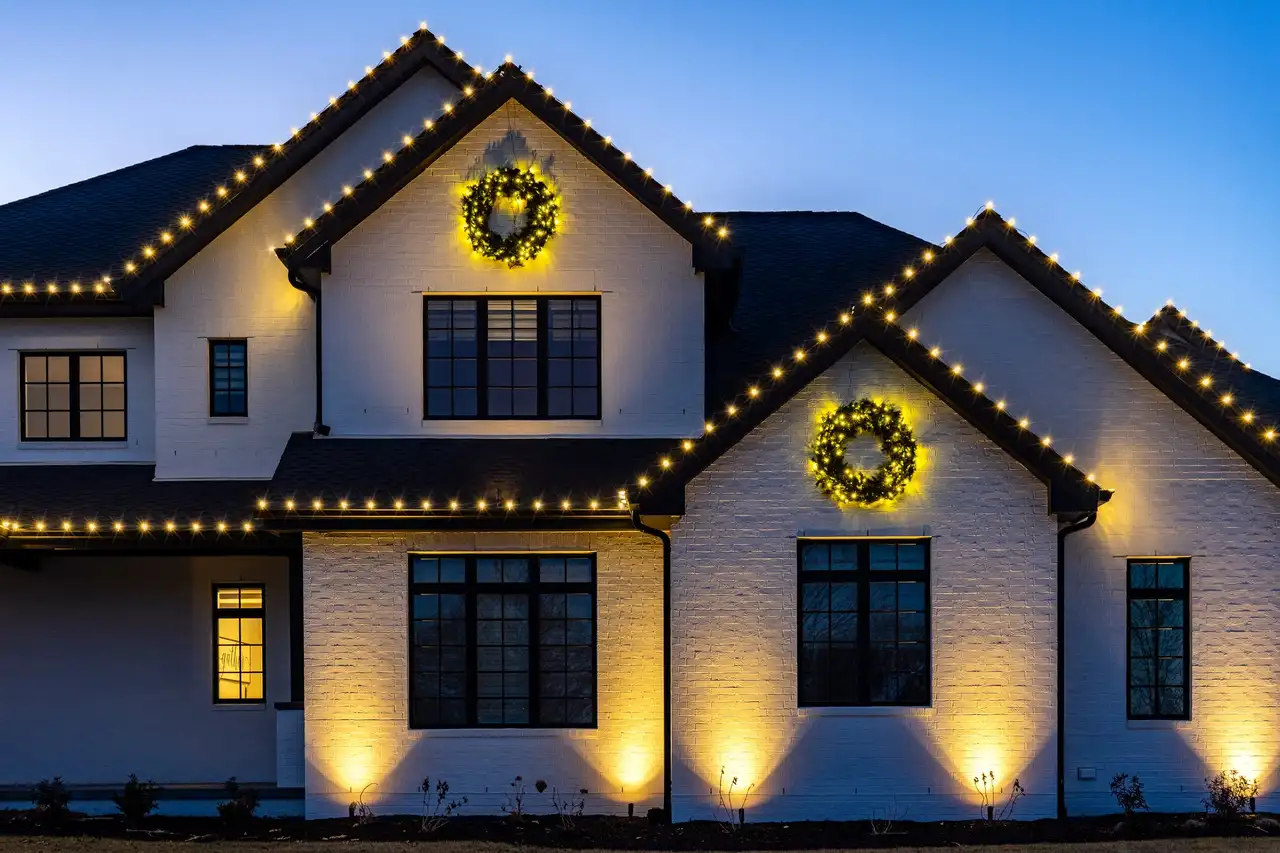
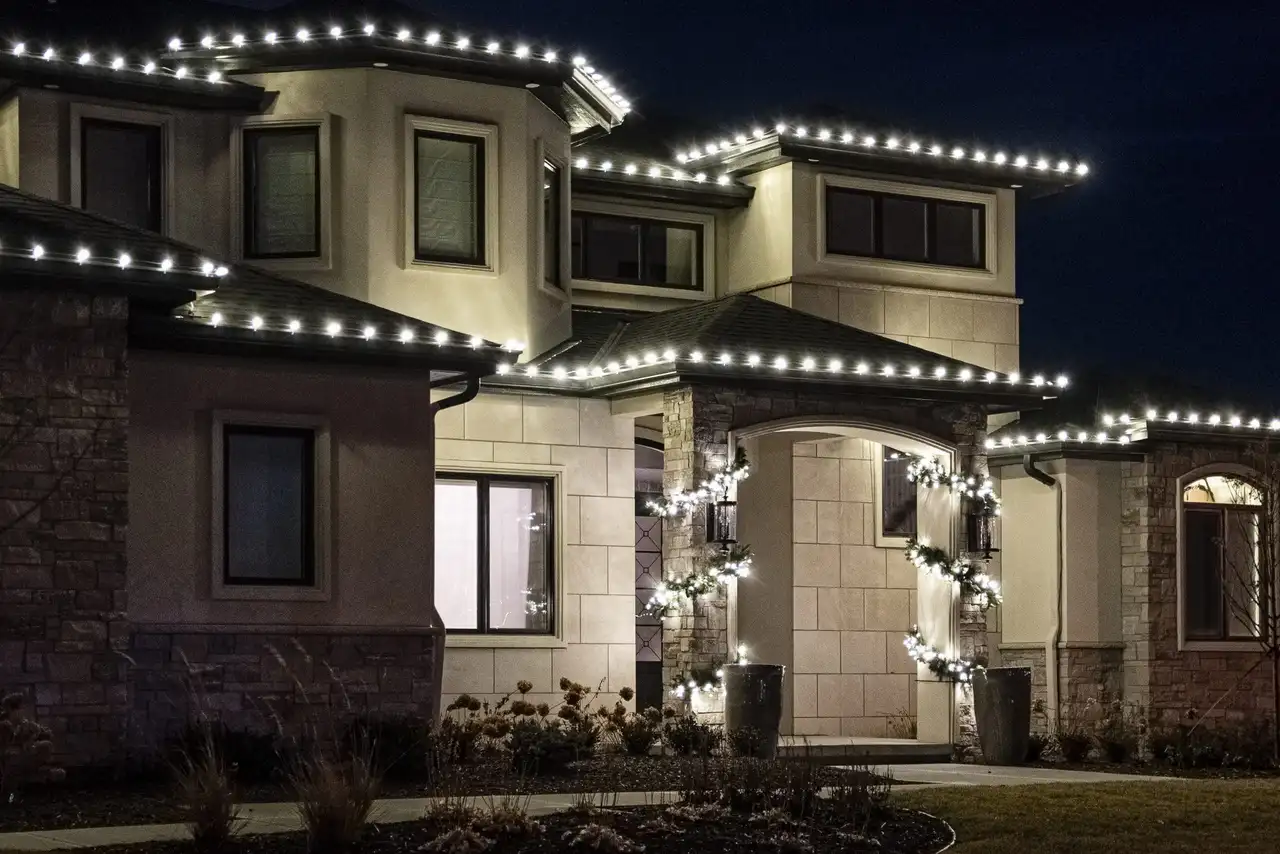
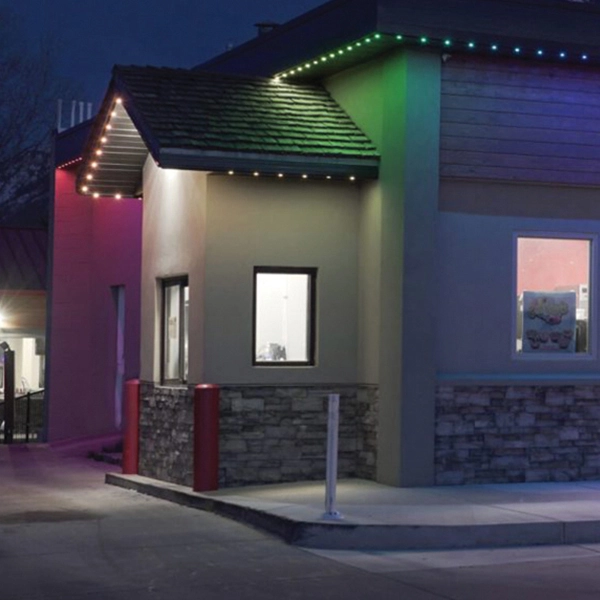
Practically that means warm white architectural lighting on ordinary evenings, which simply makes a building look considered and cared for after dark. It means brand colors for a promotion, an anniversary, or a grand opening. It means local team colors on game nights, which in our markets is not a small thing. It means awareness month colors where that matters to your organization, and holidays throughout the year rather than only in December.
For a retail, hospitality, or customer facing property, the everyday lighting is frequently worth more than the holiday capability, even though the holidays are what prompts the inquiry.
Where the Commercial Decision Differs
Several considerations apply to commercial work that rarely arise on a house.
Approvals come first. If you lease, the landlord will need to agree, and the lease may have provisions about alterations to the building envelope. Shopping centers and business parks frequently have design standards. Some municipalities and historic districts have requirements about exterior lighting, particularly on older buildings and in defined districts.
Scheduling around operations matters. Installation on a restaurant is planned around service, on a retail building around business hours, and on an office around occupancy. This is entirely workable when planned, and difficult when rushed.
Building construction affects the approach. Commercial roofing, parapets, EIFS, metal panel, and masonry all mount differently from residential fascia and soffit, and a proper assessment happens before a proposal rather than after.
Scale changes things too. Longer runs mean more attention to power distribution and controller placement, and a large building may need more than one circuit considered.
Control and Who Operates It
Worth thinking about before installation rather than after.
On a home, one person runs the app. On a commercial property, several people may need access, staff change, and the person who set it up may not be there next year.
So it is worth establishing who controls the system, whether scenes can be scheduled to run automatically rather than relying on someone remembering, and how access is handed over when staff change. A system that nobody remembers how to operate becomes a system left on one setting.
Scheduling is generally the answer for commercial properties. Set the evenings, set the seasonal changes in advance, and let it run without anybody needing to think about it nightly.
Budget and Timing
Commercial pricing depends on linear footage, building height and access, mounting surface, and how much of the structure you want lit, so a walkthrough is the only honest way to arrive at a number.
What is worth saying generally is that the comparison is not against zero. It is against the recurring annual cost of seasonal installation and removal, which continues indefinitely. A permanent system is capital spend against an operating expense that never ends, and that framing usually matters more to a business than to a homeowner.
On timing, September is when commercial projects are practical to plan. Approvals take time, particularly with a landlord or a design committee involved. Materials have lead times. And installation needs a date that suits your operation rather than whatever remains in late November.
Judging Whether It Is Working
Commercial spending usually needs some justification beyond appearance, so it is worth thinking about what you would actually measure.
For customer facing properties, the most honest measure is visibility after dark. A lit building is legible from the road at a distance that an unlit one is not, and in autumn and winter, when much of the trading day happens in darkness, that is not a small thing. If you have ever driven past your own premises and struggled to pick out the entrance, that is the problem being solved.
Social and photographic use is a second measure and easier to track than people expect. Buildings that look striking at night get photographed and shared, particularly during holidays and local events, and that reach costs nothing per impression.
For hospitality and event venues there is a more direct argument, since a venue that can change its exterior to match a wedding, a corporate event, or a team celebration is offering something a competitor with fixed lighting cannot.
And for multi tenant or managed properties, consistent exterior lighting contributes to how well maintained the whole site reads, which matters at lease renewal.
What we would not claim is a precise revenue figure. Anyone offering you one has invented it.
Questions Worth Asking
What exactly is mounted to the building, and how visible is it during the day? How is it attached, and what does that mean for the roofing or facade warranty? What is the warranty on the components and on the workmanship, and who services it if a section fails in year three?
Who is responsible for programming, and can scenes be scheduled? Is the installer insured for commercial work at your building's height? What happens if the business relocates?
Ask for references on commercial buildings specifically rather than residential, since the work is genuinely different.
Ask about scheduling for service as well. A residential customer can usually accommodate a technician on a weekday afternoon. A restaurant cannot, and a retail property in December certainly cannot. Establish before you sign whether service calls can happen outside your business hours, because a warranty that can only be exercised at your busiest time is worth less than it appears.
One more worth raising early: what happens to the installation if you sell the building or the business moves. The track is mounted to the structure, so it generally stays, and that is worth knowing when you weigh the spend against how long you expect to occupy the property.
What to Do Next
Go and look at your building after dark this week, from where your customers actually approach it. Most owners have never done this, and it is usually informative.
Then find out early whether you need landlord or association approval, because that is the item most likely to delay a project.
If you would like an assessment, New Age Lights installs permanent and seasonal lighting for commercial and residential properties across Knoxville and Oak Ridge, Chattanooga and McDonald, Birmingham, Huntsville, and the Cincinnati area. Call 256-530-0754 or visit newagelights.com.
Here is what to expect. We will walk the building, assess mounting surfaces and access honestly, and design to how the property is actually seen at night. We will tell you if a section is not worth lighting, and we will be direct about what approvals your situation is likely to require before anything is ordered.