Permanent Lighting
JellyFish Lighting vs Bosso Smart Lighting: An Installer's Side-by-Side
New Age Lights • August 2026 • TN • AL • OH • 10 min read
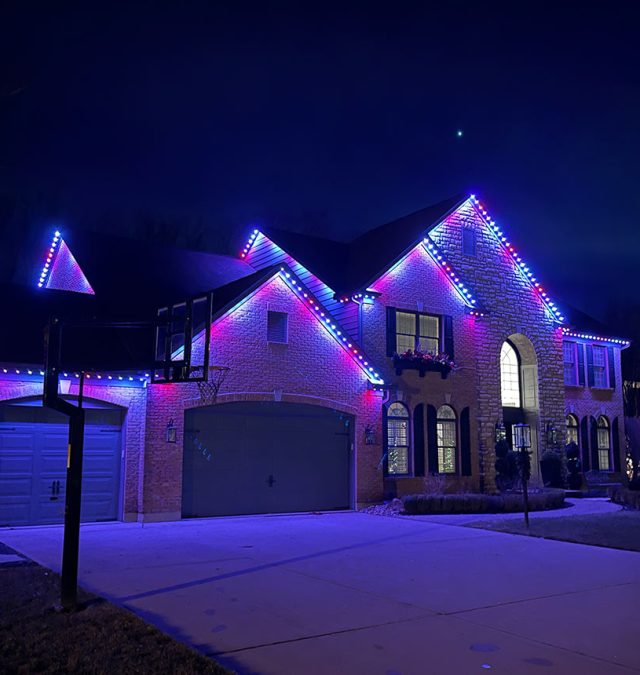
Most permanent lighting comparisons online are written by a dealer who sells one brand, which makes the conclusion easy to predict. We are an authorized installer for both JellyFish Lighting and Bosso Smart Lighting, we service both in five metros, and we have no reason to steer you to one over the other beyond which one suits your house.
So this is the comparison we actually run at a kitchen table. Every specification below is from the manufacturer's own published material. Where we add an opinion, we label it as ours.
JellyFish vs Bosso: the comparison table
| Feature | JellyFish Lighting | Bosso Smart Lighting |
|---|---|---|
| Fixture | Individually addressable pucks, 3 LEDs each, in a color-matched aluminum track | 72-lumen lights, 3 LEDs each with 4 color diodes (RGB plus dedicated true white), in a color-matched track |
| White light | Blended from RGB; full-bright white draws under 1 W per puck | Dedicated white diode (ARGBW) for a true, warm white |
| Colors | 16-plus million | 16 million |
| Presets | 100-plus preset patterns plus custom patterns | 256 default presets plus unlimited custom presets |
| Zones | Zoning supported; set at install | Up to 8 zones per controller, up to 4 controllers per account |
| Controller capacity | One controller runs up to about 263 ft; systems expand to 2,400 ft | Multiple controllers per account; UL-rated waterproof unit, typically in the garage |
| App | Cloud app, control from anywhere, schedules | App with sunrise/sunset timers, recurring schedules, Cat Bot AI assistant, music sync via phone microphone |
| Voice and smart home | App-first; check current integrations with the dealer | Amazon Alexa, Google Assistant, Siri, Control4 |
| Power draw | Under 1 W per puck at full white; low voltage | 0.96 W per light; 250 lights draw about what five ordinary bulbs draw |
| Rated life | About 50,000 hours; manufacturer says roughly 15 to 20 years of evening use | About 50,000 hours; manufacturer says 25 to 30 years at about 5 hours a night |
| Warranty | 5 years parts; year 1 bumper-to-bumper (parts, labor, service) | 5 years parts; 1 year labor |
| Published pricing | $25 to $35 per ft installed; typical homes $3,000 to $6,000; average about $4,600; controllers $650 to $850 | Average customer spends about $5,000; no published per-foot figure |
| Lead time and install | Custom track arrives in 1 to 2 weeks; install usually one day | Average install 8 to 10 hours; usually one day |
| Track record | Earliest installs from 2016 still running | National dealer network |
| Wi-Fi | Needed for cloud app control | Needs solid Wi-Fi at the controller |
| Sold and installed by | Authorized dealers | Authorized dealers |
Read the table twice and a pattern appears. On the things that matter most to how the lights look and last, the two systems are close. The real differences are in white light, zoning depth, smart-home integration, warranty structure and pricing transparency.
Where JellyFish is genuinely stronger
Our opinion, based on installing it:
- Pricing transparency. JellyFish publishes a national per-foot range, typical totals and controller pricing. You can sanity-check any dealer quote against it before you sign. We walk through that math in how much JellyFish Lighting costs per foot.
- The first-year warranty. Bumper-to-bumper for year one means parts, labor and service are all covered while the system settles in. That is the period when any install issue would surface.
- Patterns. The library of 100-plus preset patterns, plus custom patterns and zones, is deep and the effects are refined. Homeowners who want movement and variety tend to enjoy it.
- Track record. The earliest 2016 installs are still running, which is the most useful data point on longevity any manufacturer can offer.
- Brand recognition. JellyFish is the name most homeowners search for. That does not make it better, but it means more neighbors have it, and you can usually see a real install nearby before committing.
Where Bosso is genuinely stronger
- True white. The dedicated white diode is the single biggest technical difference. For a homeowner who will run warm white 300 nights a year and colors on the other 65, it matters.
- Smart-home integration. Alexa, Google Assistant, Siri and Control4 out of the box. If your house already runs on one of these, particularly a Control4 system, Bosso slots in.
- Zoning depth. Eight zones per controller and four controllers per account gives large homes, detached garages and mixed residential-commercial accounts a lot of room.
- The app extras. The Cat Bot assistant and music sync are the features people show their friends. They are not why you buy permanent lighting, but they get used.
- Fit on certain edges. Bosso's fixture and mounting sometimes land more cleanly on rooflines that the other system does not suit. This is a house-by-house judgment, and it is exactly why we carry both.
What is essentially the same
Do not let a salesperson turn these into differentiators:
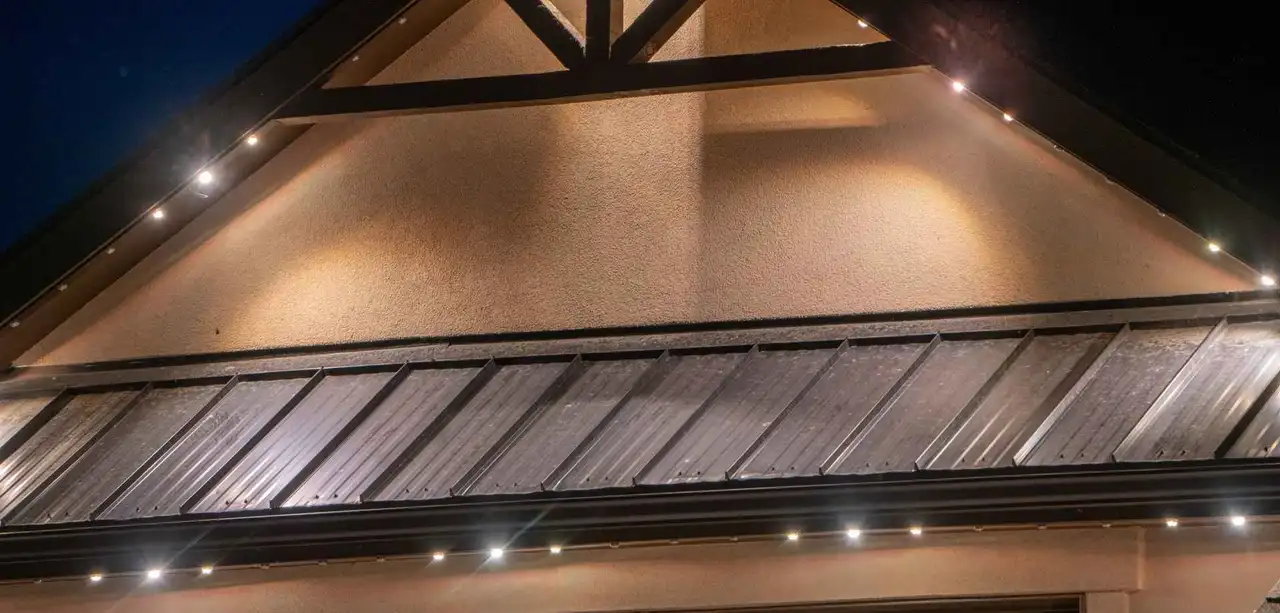
- Both use color-matched aluminum track fixed to fascia or soffit, never through roofing, so both disappear in daylight.
- Both offer 16 million colors, custom scenes and schedules.
- Both are rated around 50,000 hours. The manufacturers translate that into years differently because they assume different hours per night.
- Both are low-power. A whole roofline of either draws less than the porch lights it replaces.
- Both install in about a day for a typical home, with crews completing roughly 150 linear feet a day.
- Both are dealer-installed and dealer-serviced. Neither is a DIY kit.
- Both carry 5-year parts warranties.
JellyFish vs Bosso price
The question we hear most is which one is cheaper, and the honest answer is that on the same house they usually land close together. JellyFish publishes $25 to $35 per foot installed with typical homes at $3,000 to $6,000 and an average around $4,600. Bosso publishes an average customer spend of about $5,000. Those two averages are within a few hundred dollars of each other.
What actually moves the quote is the house: linear footage, the number of corners and peaks, roof height and access, and whether the run exceeds a single controller. A 400-foot perimeter needs a second JellyFish controller because one runs about 263 feet; a large Bosso system may also need more than one controller. Those are the line items to compare, not the brand names.
How New Age Lights decides on the site visit
We bring both systems to every permanent lighting consult. The decision runs through five questions, roughly in this order.
1. What does the edge look like?
Fascia depth, drip edge profile, gutter type and how the roof turns at each corner decide whether a fixture sits flush and stays invisible in daylight. Modern two-story stock in Farragut, Madison, Ooltewah or Mason generally suits either. Older housing in Sequoyah Hills, Mountain Brook, Fort Thomas or Chattanooga's established neighborhoods sometimes has edges that one system lands on more cleanly than the other.
2. What color is the trim?
Both systems color-match the track. We confirm the closest match for each and, on unusual trim colors, which one gets closer. That is a daytime question as much as a nighttime one.
3. How will you use it most nights?
If the answer is warm white with occasional color, Bosso's dedicated white diode is a real advantage and we say so. If the answer is patterns, movement and variety, JellyFish's pattern library gets the nod. Most homeowners are somewhere in between, and we show both lit before anyone decides.
4. What runs your house already?
A home on Control4, or one where Alexa or Google already controls the lights indoors, points toward Bosso. A homeowner who simply wants a clean app and schedules is well served by either.
5. What is the budget, and what does the fixed quote say?
We price the system that fits. If both fit, we price both and hand you the comparison. If one is cheaper on your house, we tell you, including when it is the one we did not lead with.
Whichever way it goes, the install is the same standard: a dedicated circuit, a properly sited controller, squared corners, a straight run along the fascia, and app setup before we leave. And in either case, if a run drops out later, you call us, not a support line.
Who should pick which
| Lean JellyFish if you | Lean Bosso if you |
|---|---|
| Want published pricing you can check a quote against | Want a true warm white for everyday use |
| Value a first-year bumper-to-bumper warranty | Run Alexa, Google, Siri or Control4 and want the roofline in it |
| Care most about patterns and effects | Need many zones or multiple controllers under one account |
| Want the brand your neighbors already have | Like voice commands, Cat Bot and music sync |
| Have a roofline the JellyFish fixture suits cleanly | Have a roofline the Bosso fixture suits cleanly |
For a deeper look at one side of the table, read our full Bosso guide, and for the honest case for and against permanent lighting as a category, is JellyFish Lighting worth it.
Frequently asked questions
What are the key differences between Bosso and JellyFish?
Both are dealer-installed, track-mounted, app-controlled roofline systems with 16 million colors and roughly 50,000-hour LEDs. Bosso uses lights with four color diodes including a dedicated true-white diode, offers 8 zones per controller and 4 controllers per account, and integrates natively with Alexa, Google Assistant, Siri and Control4. JellyFish uses three-LED pucks, publishes 100-plus preset patterns, adds a first-year bumper-to-bumper warranty on top of 5-year parts, and publishes national pricing of $25 to $35 per foot.
Is Bosso cheaper than JellyFish?
Not reliably. JellyFish publishes $25 to $35 per foot installed with typical homes at $3,000 to $6,000. Bosso publishes an average customer spend of about $5,000. On the same house the two quotes usually land close together, and the difference is driven more by footage, corners and controllers than by brand.
Which has better white light, JellyFish or Bosso?
Bosso's fixture includes a dedicated white diode, so its white is a true white rather than a blend of red, green and blue. JellyFish produces white by mixing its three LEDs and offers a full-bright white that draws under a watt per puck. If everyday warm white is your priority, ask to see both lit on a sample before choosing.
Which has the better warranty?
Both cover parts for 5 years. JellyFish adds a first-year bumper-to-bumper warranty covering parts, labor and service. Bosso covers labor for 1 year. In practice, the dealer who installed your system is the one servicing it under either warranty, so the dealer's own workmanship commitment matters as much as the manufacturer's.
Can one company install both JellyFish and Bosso?
Yes. New Age Lights is an authorized installer for both and services both. We bring both to the site visit and recommend the one that fits the roofline, trim, white-light preference, smart-home setup and budget, including when that is the less expensive option.
How does New Age Lights decide which system to recommend?
On site. We look at fascia depth, drip edge, gutter profile and how the roof turns at corners, ask how you plan to use the lights most nights, check which smart-home platform you already run, confirm Wi-Fi at the controller location, and then price the one that fits. If both fit, we say so and show the difference.
Two systems, one honest recommendation
New Age Lights has installed more than 3,000 lighting projects across Tennessee, Alabama and Ohio, and we are authorized for both JellyFish and Bosso. The consult is free, the quote is fixed before anything is ordered, and the manufacturer specs above are published at jellyfishlighting.com and bosso.biz if you want to check our work.
Get a free quote or call your local office:
- Huntsville, AL: (256) 530-0754
- Birmingham, AL: (205) 382-8991
- Chattanooga, TN: (423) 528-1240
- Knoxville, TN: (865) 264-0180
- Cincinnati, OH: (513) 713-0490