Permanent Lighting
How Much Does JellyFish Lighting Cost Per Foot? (2026)
New Age Lights • August 2026 • TN • AL • OH • 9 min read
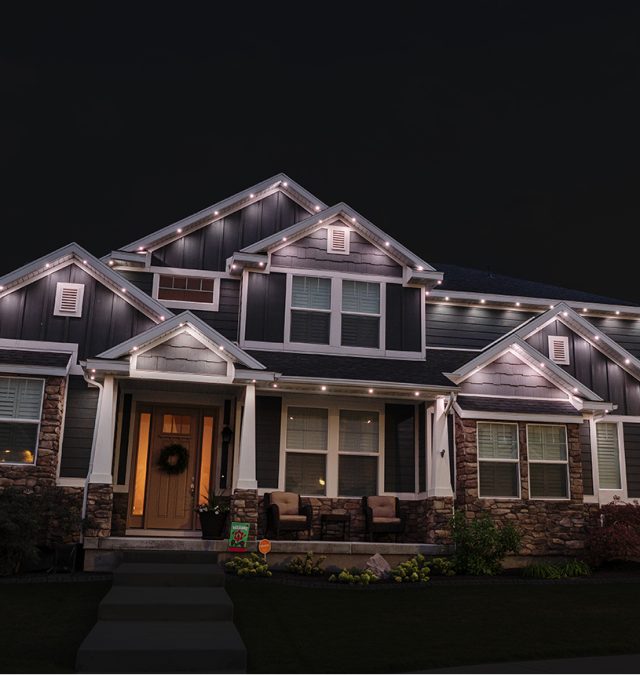
JellyFish lighting cost per foot is the most searched permanent lighting price question in every market we serve, and it is one of the few where the manufacturer has published a straight answer. That makes it possible to do real math before anyone visits your house, and to check any quote you receive afterward.
As an authorized JellyFish Lighting installer across Huntsville, Birmingham, Chattanooga, Knoxville and Cincinnati, here is how we would explain the number to a customer, including the controller detail that most per-foot conversations skip.
The manufacturer's published pricing
JellyFish publishes the following national guidance on jellyfishlighting.com. These are the numbers to hold every quote against.
| Item | Published range |
|---|---|
| Installed cost per linear foot | $25 to $35 |
| Typical home total | $3,000 to $6,000 |
| Average project | About $4,600 |
| Controller | $650 to $850 |
| Track per controller | Up to about 263 ft |
| Maximum system size | Expands to 2,400 ft |
| Track lead time | 1 to 2 weeks (custom cut and color-matched) |
| Install time | Usually one day |
Work backward from the typical total and the per-foot range and you learn something useful: a $3,000 to $6,000 project at $25 to $35 a foot is roughly 120 to 170 feet of track. In other words, the typical JellyFish customer lights the street-facing roofline, not the full perimeter. That is worth knowing before you measure your own house.
The controller math most quotes skip
Every JellyFish system needs at least one controller, and the manufacturer lists them at $650 to $850. One controller powers up to about 263 feet of track. Cross that line and the system needs a second controller, which is why a 400-foot house does not cost exactly twice a 200-foot house, and why per-foot pricing does not fall as steeply on large homes as people expect.
The other thing to know is how the controller appears on a quote. The manufacturer's $25 to $35 figure is described as installed pricing. Some dealers fold the controller into their per-foot number; others list it as a separate line with a lower per-foot rate covering track, pucks and labor. A $25-per-foot quote plus a $750 controller and a $30-per-foot all-in quote can be the same money on a 150-foot house. Ask which way your dealer is quoting before comparing.
Worked examples: 150, 250 and 400 feet
Three houses we see regularly across our five metros, priced on the manufacturer's range. These are illustrations, not quotes, and your fixed price comes after a site visit.
| Home | Linear feet | Controllers needed | At $25/ft | At $35/ft | Typical result |
|---|---|---|---|---|---|
| Single-story ranch, front roofline plus garage return | 150 | 1 | $3,750 | $5,250 | Inside the manufacturer's typical $3,000 to $6,000 band |
| Two-story, front eave, gables and both sides | 250 | 1 (near the 263 ft limit) | $6,250 | $8,750 | Above the typical band; a future extension would need a second controller |
| Large two-story, full perimeter with dormers | 400 | 2 | $10,000 | $14,000 | Second controller is part of why the per-foot rate holds near the range rather than dropping |
The 150-foot home
This is the ranch or single-story brick house common in older neighborhoods like Powell and Karns around Knoxville, Norwood in Cincinnati, or parts of Homewood outside Birmingham. The front eave, one gable and the garage return come to about 150 feet. One controller, one day of install, and a total that sits comfortably inside the manufacturer's typical range.
The 250-foot home
The two-story stock in Farragut and Hardin Valley, Madison and Hampton Cove near Huntsville, Ooltewah outside Chattanooga, or Mason north of Cincinnati usually measures 250 to 350 feet for a complete front-plus-sides outline. At 250 feet you are near the limit of one controller. Ask your installer to note that on the quote, because adding the back of the house later means adding a controller.
The 400-foot home
A full perimeter on a large two-story with dormers crosses 263 feet and needs two controllers. The per-foot rate does not fall much because the second controller, extra corners and the height all add work. This is where the manufacturer's 2,400-foot ceiling starts to matter for very large homes and for the commercial frontages we light.
What changes the per-foot number
Within the $25 to $35 range, and occasionally outside it, these are the drivers.
- Linear footage. More feet means more track, more pucks and more labor. It is the biggest single input.
- Corners, peaks and dormers. Every change of direction is a cut, a joint and a wiring connection. A simple rectangle prices lower per foot than a roofline with three gables and two dormers at the same total footage.
- Height and pitch. Two-story eaves take longer and need different equipment than a walkable ranch. Steep pitches slow the crew further.
- Access. Mature trees against the eave, a sloped lot, a screened porch or a pool enclosure under the roofline all add time.
- Track color. Color-matching the aluminum channel to your trim is what makes the system disappear in daylight. We treat it as standard.
- Controllers. Crossing 263 feet, or lighting a detached garage, adds a controller at $650 to $850.
- Power and wiring path. The distance from the roofline to a suitable power point and controller location affects labor.
- Labor market. Dealers set their own labor rates, so the same house can draw different quotes in different cities.
Dealer quotes vs the manufacturer's range
JellyFish is sold and installed through authorized dealers. The manufacturer publishes the national range; the dealer quotes your house. Those are different things, and the gap between them is where homeowners get confused.
The manufacturer's range is a sanity check, not a price list. If a quote lands well outside $25 to $35 per foot, ask why. Sometimes the answer is legitimate: a very tall or complex roofline, a second controller, or a long wiring run. Sometimes the answer is that the quote includes things a lower quote does not, such as color-matched track, app setup, a workmanship warranty and a dealer who will still answer the phone in five years. And sometimes there is no good answer, which is useful to know too.
Our own approach is a free site visit, a measured footage, and a fixed quote before any track is ordered. Because custom track takes one to two weeks to arrive, the sequence is quote, order, then a single install day, with crews completing about 150 linear feet a day.
Can I buy JellyFish Lighting and install myself?
No, and this is a question we get on almost every consult. JellyFish is a dealer-installed product. The track is custom cut and color-matched to your measurements, the pucks are wired to a controller on a dedicated circuit, and the system is configured and tested by zone before the crew leaves. The dealer who installed it is also the one who services it under the 5-year parts warranty and the first-year bumper-to-bumper coverage. A permanent fixture fastened to your fascia is not the place to save on labor.
Putting the cost in context
Three comparisons help most homeowners decide whether the number is reasonable for them.
- Against seasonal lighting. A professional Christmas display leases for roughly $700 to $1,500 a year for a basic roofline. A $4,600 JellyFish install is three to six seasons of that, and it runs every night of the year. Our seasonal cost guide lays out the lease math.
- Against Bosso. Bosso publishes an average customer spend of about $5,000, within a few hundred dollars of JellyFish's $4,600 average. On the same house they land close. The differences are in the fixture, not the price, and we cover them in JellyFish vs Bosso.
- Against lifespan. Pucks are rated around 50,000 hours, which the manufacturer puts at 15 to 20 years of evening use. Spread $4,600 over 15 years and the roofline costs about $300 a year, before you count the ladder you never climb.
Frequently asked questions
How much does JellyFish Lighting cost per foot?
JellyFish publishes national guidance of $25 to $35 per linear foot installed. Typical homes land between $3,000 and $6,000, with an average around $4,600. Controllers are listed at $650 to $850, and one controller powers up to about 263 feet of track.
How much does JellyFish Lighting cost for a whole house?
At $25 to $35 per foot, a 150-foot front runs roughly $3,750 to $5,250, a 250-foot front-and-sides run about $6,250 to $8,750, and a 400-foot full perimeter about $10,000 to $14,000 including a second controller. Most homeowners light the street-facing roofline rather than the full perimeter, which is why the manufacturer's typical total is $3,000 to $6,000.
Why does one JellyFish quote cost more than another?
Linear footage is the biggest driver, followed by the number of corners, gables and dormers, roof height and access, and whether the run exceeds one controller. Dealers also price their own labor, so the same house can draw different quotes. Check any quote against the manufacturer's $25 to $35 per foot range and ask whether the controller is included in the per-foot number.
Can I buy JellyFish Lighting and install it myself?
No. JellyFish is sold and installed through authorized dealers. The custom track is cut to your measurements, arrives in one to two weeks, and is fitted, wired and configured by the dealer, who then services it under the warranty.
Is JellyFish Lighting cheaper than seasonal Christmas lights?
Not in year one. A typical JellyFish install of $3,000 to $6,000 costs several times a seasonal lease of roughly $700 to $1,500. Over five to seven seasons the totals converge, and the permanent system runs every night of the year rather than for six weeks.
Does New Age Lights charge by the foot for JellyFish?
We measure by the foot and quote a fixed price after a free site visit. The number covers custom color-matched track, pucks, controller, installation, app setup and our workmanship warranty, and it does not change once you have it.
Get your roofline measured and a fixed JellyFish quote
New Age Lights is an authorized JellyFish Lighting installer with more than 3,000 projects completed across Tennessee, Alabama and Ohio. We measure the house, tell you how many controllers it needs, show you the color-matched track, and hand you one number before anything is ordered. If Bosso suits your roofline better, we will say so and quote that instead.
Get a free quote or call your local office:
- Huntsville, AL: (256) 530-0754
- Birmingham, AL: (205) 382-8991
- Chattanooga, TN: (423) 528-1240
- Knoxville, TN: (865) 264-0180
- Cincinnati, OH: (513) 713-0490