Permanent Lighting
Is JellyFish Lighting Worth It? What Homeowners Ask Us After Seeing a Neighbor's House
New Age Lights • August 2026 • TN • AL • OH • 9 min read
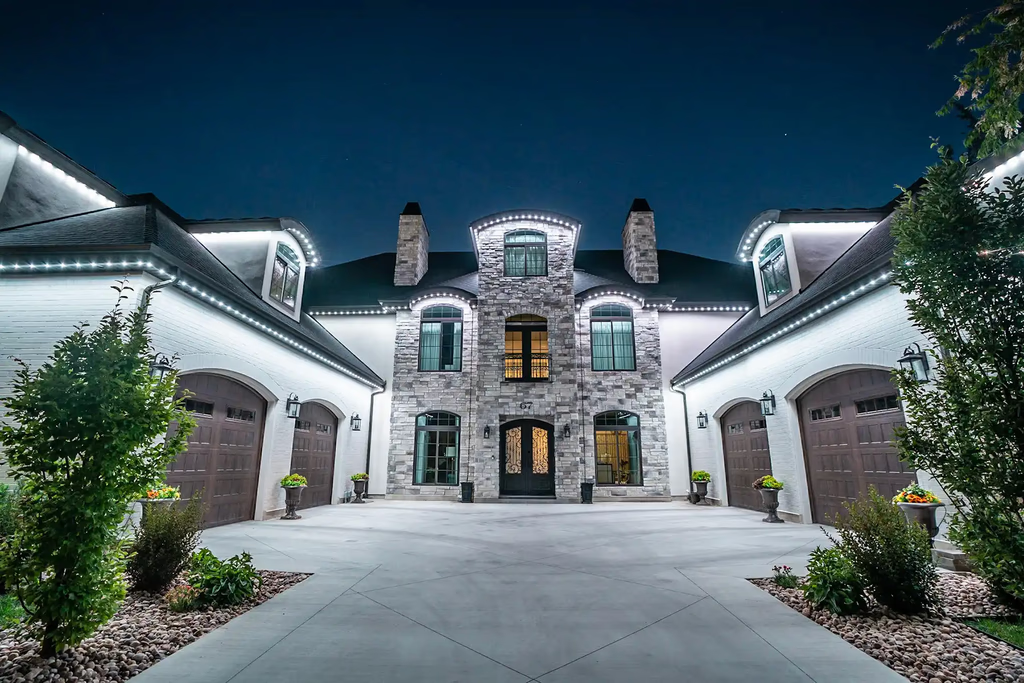
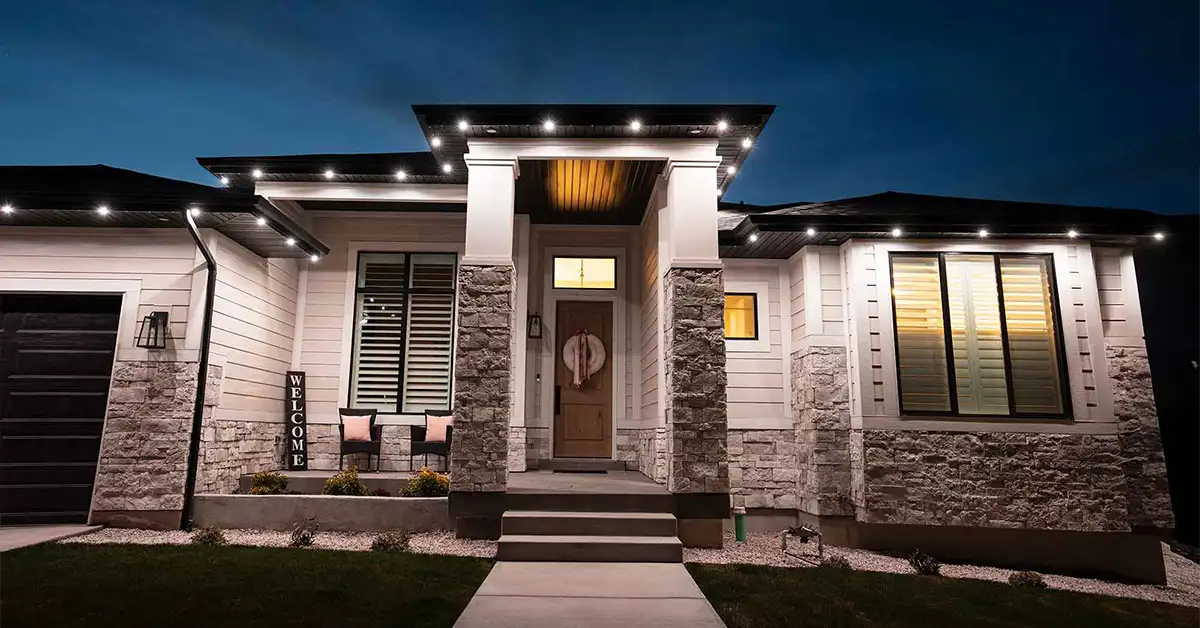
The call usually starts the same way. A neighbor on the street had lights installed in the fall, they have been running warm white every night since, they turned orange for a Tennessee game or crimson for Alabama, and now the homeowner wants to know whether the thing is worth what it costs.
We install JellyFish Lighting across five metros and we would like to sell you a system. We would also like to still be answering your calls in ten years, which means telling you honestly when it is not the right buy. This post is the version of that conversation we have on driveways, with the manufacturer's numbers rather than ours.
What you are actually paying for
JellyFish's published national pricing is $25 to $35 per linear foot installed, with typical homes at $3,000 to $6,000 and an average around $4,600. Controllers are $650 to $850 and one runs about 263 feet of track. The full breakdown is in how much JellyFish Lighting costs per foot.
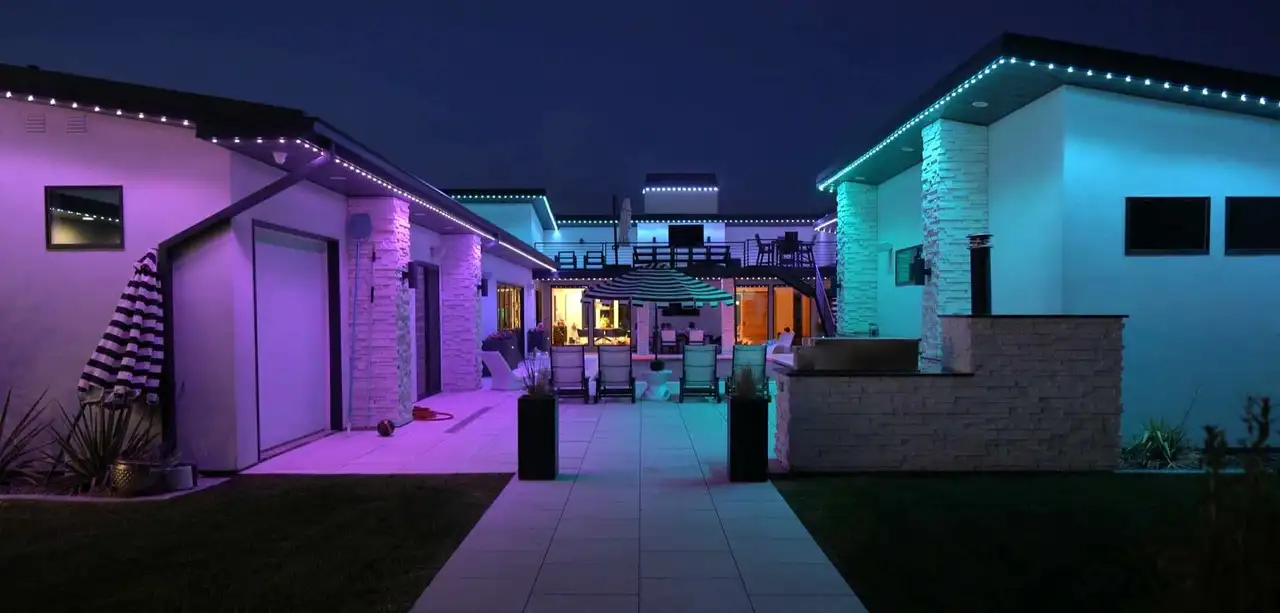
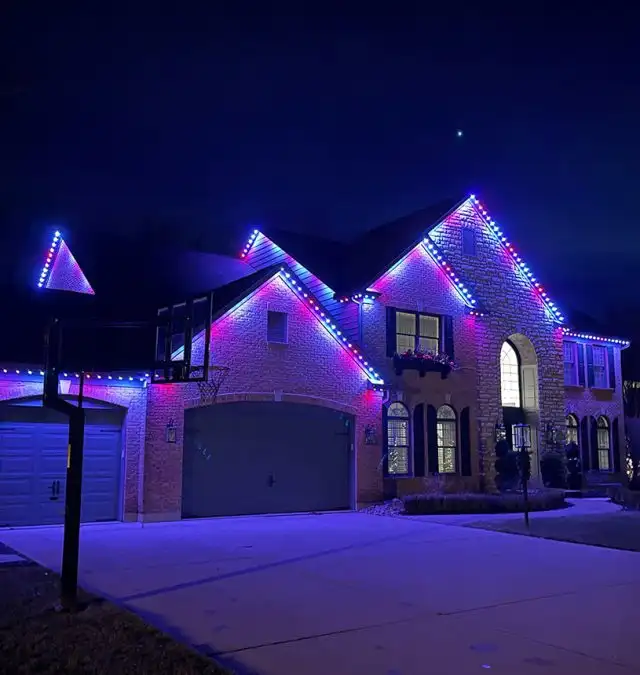
For that money you get individually addressable pucks in a color-matched aluminum track fixed to your fascia or soffit, a controller, a cloud app with 16-plus million colors, 100-plus preset patterns, custom patterns, zones and schedules, and a system that draws under a watt per puck at full white. It goes up in a day once the custom track arrives, and the earliest installs from 2016 are still running.
The case for: when it is worth it
You will use it more than six weeks a year
This is the whole argument. A homeowner who runs warm white every evening, switches to team colors on Saturdays in the fall, does red and green in December and something for the Fourth of July is using the system 365 nights. Divided across that many evenings, a $4,600 system over a 15-year rated life is roughly $300 a year, and the ladder never comes out of the garage.
You already pay for seasonal lights
A professional Christmas display leases for about $700 to $1,500 a year for a basic roofline. Five seasons of that is $3,500 to $7,500, which overlaps the entire JellyFish price range. If you are on year two of a seasonal lease and plan to stay in the house, the permanent math starts to look sensible. If you own your seasonal lights and hang them yourself, the math is different and we get to that below.
You plan to stay
Permanent lighting is a fixture, not a purchase you take with you. Five or more years in the house is the point where the annual cost gets comfortable and the convenience compounds.
Your roofline suits the track
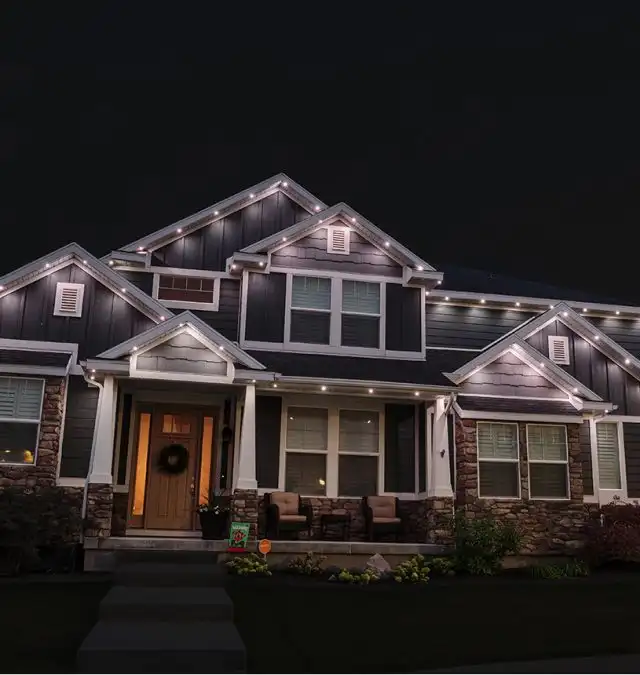
Track wants a clean fascia or soffit to sit against. The two-story stock built in the last twenty years across Farragut, Madison, Ooltewah, Hoover and Mason generally suits it well. Older housing can too, but that is a site-visit judgment, and it is one reason we also carry Bosso Smart Lighting for edges JellyFish does not land on cleanly.
You value not climbing
Every holiday season sends thousands of people to emergency rooms from ladder falls while hanging lights. A permanent system removes the ladder from the equation, for you and for the installer who would otherwise be on your roof every November and January.
The case against: when to pass
We say this on driveways and we will say it here.
- You might move in the next three years. You will not recoup the cost at sale in any predictable way, and the buyer may not care. Lease seasonal lights instead and revisit permanent in the next house.
- You only want lights in December. If warm white on a Tuesday in March does nothing for you, you are paying permanent money for a six-week product. A seasonal program is the better fit, and it includes wreaths and trees that a roofline system does not.
- You hang your own lights and enjoy it. Some people do. If you own commercial-grade product, have a walkable roof and like the ritual, your annual cost is low and permanent lighting is a convenience purchase, not a savings one.
- Your roofline does not suit track. Some edge details, some historic-district rules and some HOA covenants make a permanent fixture the wrong call. We check all three before quoting.
- Wi-Fi does not reach the controller location. This is fixable with a mesh node, but if you are not willing to sort it, the app experience will frustrate you.
- The budget is tight this year. A rushed permanent install is worse than a good seasonal one. There is no penalty for waiting a season.
How long does JellyFish Lighting last?
The pucks are rated around 50,000 hours. JellyFish translates that into roughly 15 to 20 years of evening use, and the earliest systems from 2016 are still running, which is the most honest longevity data any manufacturer in this category can offer.
LEDs do not fail the way a bulb does. They dim very slowly over decades. What occasionally needs attention on any permanent system is a connection at a joint, a power supply, or the controller's Wi-Fi, and each of those is a short service visit for the installer who did the job. Track is aluminum and color-matched, so it does not rust or fade in a way that shows from the street.
What the warranty actually covers
| Period | Coverage |
|---|---|
| Year 1 | Bumper-to-bumper: parts, labor and service |
| Years 2 to 5 | Parts |
| Beyond year 5 | Dealer service at the dealer's rates |
The first-year bumper-to-bumper coverage is the meaningful part. Any install issue surfaces in the first twelve months, and in that window everything is covered. From year two to five, parts are covered and labor is the dealer's call, which is why the dealer's own workmanship warranty matters. Ours covers product and workmanship, and if a run drops out you call us, not a manufacturer's support line.
What JellyFish Lighting cannot do
Marketing for permanent lighting tends to skip this section, so here it is.
- It does not light the yard. No tree wraps, no wreaths, no garland, no walkway stakes. It is a roofline product. Homeowners who love a full seasonal display often keep a smaller seasonal package for December alongside the permanent roofline.
- It does not outline windows or columns unless those have a suitable edge to mount track on, which most do not.
- It is not portable. It stays with the house.
- It is not a DIY product. It is sold and installed through dealers, and the custom track takes one to two weeks to arrive.
- It is not free to run, although it is close. Under a watt per puck at full white means a whole roofline draws less than the porch lights.
- It will not make a bad roofline interesting. A simple rectangle of eave looks like a simple rectangle of eave, lit. The homes that look spectacular have gables, dormers and depth for the light to work with.
Is JellyFish Lighting a good company?
By the measures a homeowner can check at jellyfishlighting.com: JellyFish publishes its pricing, publishes its warranty, has a national dealer network, has been installing since 2016 with those systems still running, and sells a low-voltage product that draws under a watt per light. Those are the marks of a manufacturer that expects to be around.
The part that determines your experience, though, is the dealer. The dealer measures, installs, configures and services. When you read JellyFish lighting reviews online, look at whether the complaint is about the product or about a dealer who did not show up, and then read the reviews of the specific company that would install yours. Ask how long they have carried the product, how many systems they have in your area, and who answers the phone in December.
The neighbor test
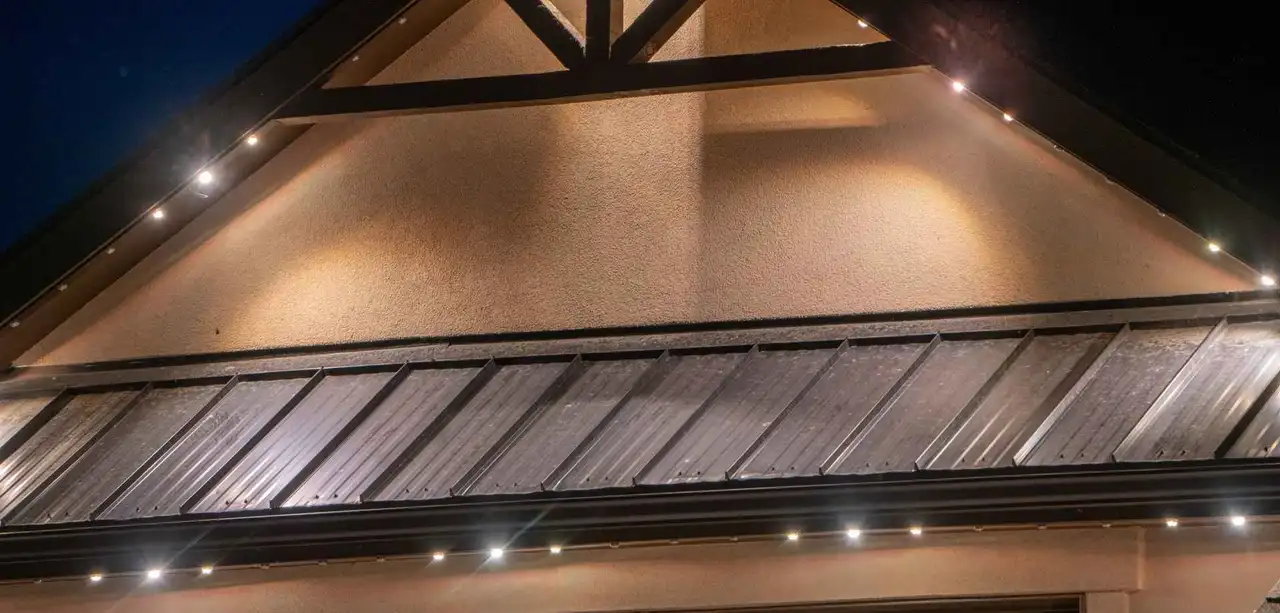
The best research you can do costs nothing. Ask the neighbor who has it three questions: what did it cost, has anything gone wrong, and would they do it again. Then go look at their house at noon and see whether you can spot the track. If you cannot, and they say yes, you have most of your answer. If the track is visible from the street in daylight, the installer did not color-match it, and that is a dealer problem worth avoiding.
We are happy to point you to local installs in Huntsville, Chattanooga or any of our other markets so you can do exactly that.
Frequently asked questions
Are JellyFish lights worth it?
For a homeowner who plans to stay in the house five or more years, pays for professional Christmas lights or dreads hanging them, and wants everyday warm white or game-day colors, usually yes. A typical $3,000 to $6,000 install spread over a rated life of 15 to 20 years costs a few hundred dollars a year. For a homeowner who may move soon, only wants lights in December, or has a roofline the track does not suit, seasonal lighting is the better buy.
Is JellyFish Lighting a good company?
JellyFish is an established manufacturer with a national dealer network, published pricing of $25 to $35 per foot, a 5-year parts warranty with year one bumper-to-bumper, and installs from 2016 still running. Your experience depends heavily on the local dealer who installs and services the system, so read the dealer's reviews and ask how long they have carried the product.
How long does JellyFish Lighting last?
The pucks are rated around 50,000 hours, which the manufacturer translates to roughly 15 to 20 years of evening use. The earliest systems installed in 2016 are still running. LEDs dim very gradually rather than failing outright, and the parts most likely to need attention over that span are connections and power supplies, not the lights.
What can JellyFish Lighting not do?
It lights the roofline, not the yard. It does not wrap trees, hang wreaths or outline windows, so a homeowner who loves a full seasonal display will still want some of that in December. It needs Wi-Fi for app control, it is a permanent fixture on your fascia, and it is not a DIY product.
Do permanent lights increase home value?
There is no reliable national data putting a dollar figure on it, and we do not quote one. What we can say is that a color-matched track that disappears in daylight does not hurt curb appeal, and buyers increasingly recognize the product. Treat any resale value as a possible bonus, not the reason to buy.
What are the most common JellyFish Lighting complaints?
The ones we hear are about price relative to seasonal lights, about Wi-Fi or app connectivity when the controller sits in a dead spot, and about dealers who were slow to service. The first is a real tradeoff, and the second two are dealer issues: check signal at the controller location before install and choose an installer who services what they sell.
Find out which camp your house is in
New Age Lights has completed more than 3,000 lighting projects across Tennessee, Alabama and Ohio, and we install both JellyFish and Bosso. The consult is free, the quote is fixed before anything is ordered, and if seasonal lighting is the smarter buy for your house this year, we will tell you and quote that instead.
Get a free quote or call your local office:
- Huntsville, AL: (256) 530-0754
- Birmingham, AL: (205) 382-8991
- Chattanooga, TN: (423) 528-1240
- Knoxville, TN: (865) 264-0180
- Cincinnati, OH: (513) 713-0490