

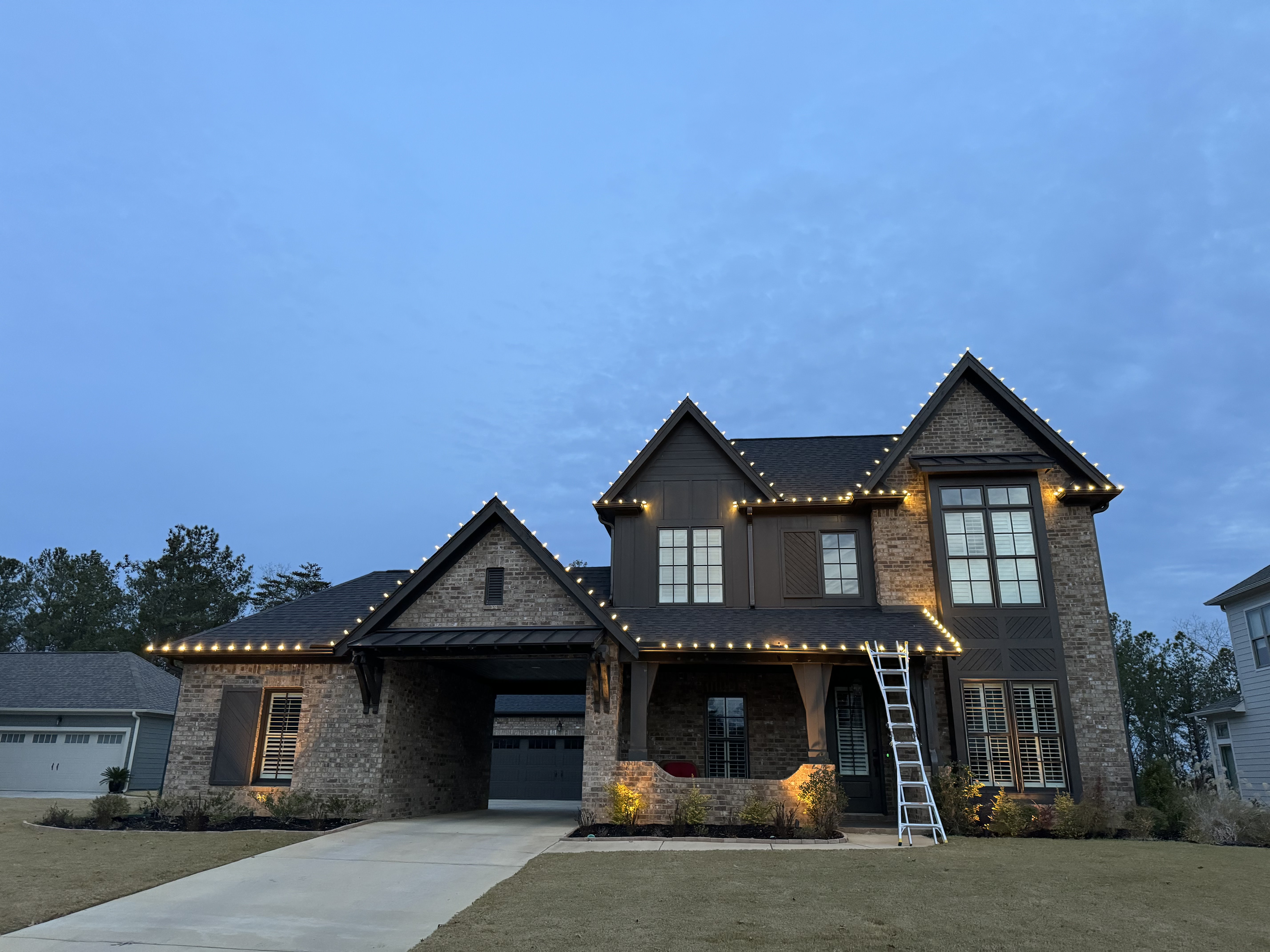
Short Answer: Quality permanent outdoor lighting is designed for low maintenance, but it is not zero maintenance. Year one usually involves only minor adjustments and occasional troubleshooting through the warranty period. Beyond year one, expect occasional bulb or chip replacements, app or controller updates, and physical cleaning. A reputable installer should provide responsive warranty service in year one, easy follow-up support afterward, and clear documentation of what is covered. Here is what good service looks like and how to evaluate it before you buy.
If you are considering permanent outdoor lighting (sometimes called permanent holiday lighting or programmable trim lighting) for your home, the upfront cost gets most of the attention in sales conversations. The maintenance reality over the years you own the lighting gets less attention but is just as important to your overall satisfaction.
Across our service areas in Tennessee, Alabama, and Ohio, we have installed permanent lighting on properties for years now. The honest truth about maintenance is that good systems require very little, but the difference between “very little” and “nothing” matters when you are evaluating brands and installers.
Year One: Settling In
The first year after installation is when most issues surface, if they are going to. Common year-one items:
App and controller setup adjustments. The first few weeks often involve refining program settings, adjusting brightness levels for different times of year, and getting the schedule dialed in.
Occasional connectivity issues that need troubleshooting (Wi-Fi problems on the controller, app updates, etc.).
Manufacturing defects in individual chips or LED segments that need warranty replacement. These are rare on quality systems but do happen.
Adjustments to mounting if a section did not get installed cleanly the first time. A reputable installer comes back to fix this without charge.
Throughout year one, you should expect responsive warranty service from your installer. Calls returned within a day. Service visits scheduled within a week or two. No charges for issues that fall under warranty.
Years Two Through Five: Steady State
After the initial settling-in period, well-installed permanent lighting enters a stable phase that requires minimal attention. Typical activity:
Occasional bulb or chip replacements due to normal LED degradation or rare failures. Quality LED chips are rated for 50,000+ hours, so most never need replacement during typical 5 to 10 year ownership periods.
App and controller firmware updates that may need to be installed periodically.
Annual cleaning of the lights themselves to remove dust, pollen, and grime that accumulate over time. Some homeowners do this themselves; some have the installer do it.
Adjustments to programming as your preferences change or new features become available.
For most properties, this stage involves 1 to 3 service interactions per year, often handled remotely through the app rather than requiring on-site visits.
Years Five and Beyond
The longer time horizon involves some larger considerations:
Controller replacement may be needed at some point as electronics age. Most quality controllers last 7 to 10 years.
Track or channel replacement on sections that have weathered more than expected (south-facing exposures, areas hit by extreme weather).
App platform changes if the manufacturer migrates to a new ecosystem (which happens occasionally in this industry).
Brightness adjustments as LED chips dim slightly over years (typically a 10 to 20 percent reduction over a 50,000-hour life).
None of these are catastrophic, but they are realistic. A 10-year-old permanent lighting installation will have had some maintenance touch-ups along the way.
What Good Warranty Coverage Looks Like
Compare warranty offerings carefully. Quality systems typically include:
5 to 10 years on the LED chips themselves.
3 to 5 years on the controller and electronics.
1 to 5 years on installation labor (the actual labor to fix issues).
Lifetime coverage on certain track or housing components.
Watch out for warranties that cover only “manufacturer defects” with vague exclusions for weather, water, or installation issues. Real warranties cover what is likely to fail in normal use.
What Maintenance Costs After Warranty
Once warranty periods end, typical maintenance costs:
Service call: $100 to $200 for a single visit covering basic troubleshooting and minor repairs.
LED chip replacement: $50 to $200 depending on quantity and accessibility.
Controller replacement: $300 to $600 typically including labor.
Section replacement (lengthy track segment): $200 to $500 depending on length and material costs.
Annual cleaning: $100 to $300 if outsourced.
Most owners spend less than $200 per year on maintenance after the warranty period, which is reasonable for a system that delivers years of programmable lighting use.
What You Can Do Yourself
Several maintenance items are homeowner-friendly:
Cleaning the lights with a soft brush or low-pressure water during regular gutter cleaning.
App firmware updates that the manufacturer pushes.
Programming changes for new schedules, holiday displays, or scene preferences.
Reset cycles when something seems off (turn off the breaker for 30 seconds, then back on).
For more involved repairs, professional service makes sense given the height and electrical connections involved.
Choosing an Installer Who Will Actually Be There
The biggest maintenance variable is the installer. A great installer:
Has been in business for several years and will likely still be there when you need service.
Provides clear warranty documentation in writing.
Has a reputation for responsive service and reasonable post-warranty pricing.
Uses quality components that the manufacturer will continue to support.
Documents your installation properly so future service visits can reference what was done.
A great product installed by a poor installer often produces a worse experience than a good product with great installer support. Evaluate both before you buy.
Red Flags in Maintenance Conversations
During the sales process, listen for:
Vague answers about what the warranty actually covers.
Pressure to buy that does not include detailed maintenance discussion.
Companies that are unfamiliar with maintenance scenarios you ask about.
Lack of references to specific manufacturer warranties or service procedures.
Assumptions that you will never need any service (“these lights are 100 percent maintenance free”).
Honest installers tell you what to expect over time and what their service approach is. Companies that gloss over maintenance often have weak service after the sale.
What to Do Next
If you are considering permanent outdoor lighting and want to understand the realistic maintenance picture for your home, we are glad to walk you through what we cover and what to expect. Reach out anytime to schedule a consultation in the Tennessee, Alabama, or Ohio areas we serve.